
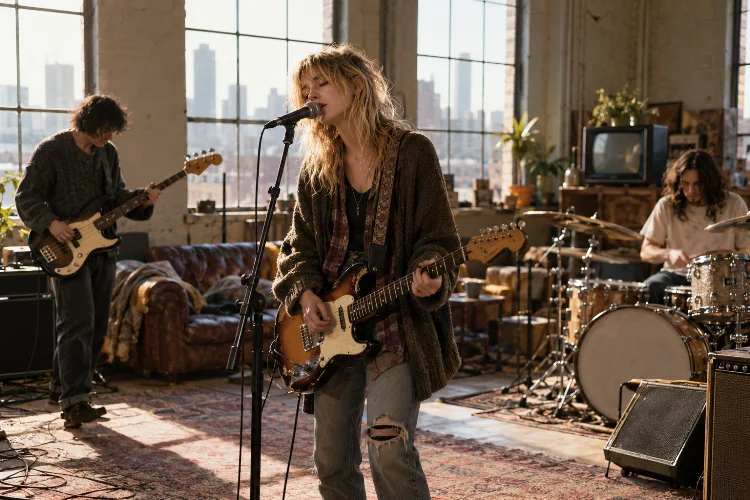
Imagine turning on the radio in the early 1990s and suddenly hearing something completely different from the polished rock anthems and flashy guitar solos that dominated the previous decade.
The guitars sounded rougher, the lyrics felt more personal, and the musicians looked like ordinary people rather than untouchable rock stars.
Something big was happening.
That transformation was driven by alternative rock, a musical movement that challenged mainstream expectations and completely changed the direction of popular music.
Bands such as Nirvana, Pearl Jam, R.E.M., Radiohead, and the Smashing Pumpkins introduced audiences to a different kind of rock experience.
Instead of focusing entirely on technical perfection and glamorous lifestyles, these artists explored emotional vulnerability, unconventional songwriting, and creative independence.
But the rise of alternative rock in the 1990s wasn’t simply about introducing a new guitar sound.
It reshaped record label strategies, music television, youth culture, fashion, and the relationship between underground artists and commercial success.
So, how did a movement that originally existed outside mainstream music become one of the decade’s defining cultural forces?
Let’s explore the bands, breakthrough albums, industry changes, and lasting musical innovations behind this remarkable revolution.
1. The Underground Roots of Alternative Rock Before the 1990s
How College Rock Created a New Musical Community
Before alternative rock became a household name, it existed largely outside mainstream radio and commercial music television.
During the 1980s, bands developed loyal audiences through college radio stations, independent record stores, small venues, and underground music publications.
Artists such as R.E.M., Sonic Youth, Hüsker Dü, the Replacements, and the Pixies helped establish an alternative musical culture.
Their music combined elements of punk rock, post-punk, folk, noise rock, and experimental guitar music.
Unlike many commercially successful rock acts of the period, these musicians often emphasized originality over conventional radio appeal.
College radio became particularly important because it offered exposure to artists who rarely appeared on major commercial stations.
Students discovered unusual recordings, shared mixtapes, and supported regional music scenes.
This created a connected underground culture long before social media made music discovery almost effortless.
R.E.M. Helped Bridge the Underground and Mainstream
R.E.M. played an especially important role in demonstrating that alternative musicians could achieve commercial success without completely abandoning their creative identity.
Formed in Athens, Georgia, the band developed a recognizable sound built around Peter Buck’s jangling guitars, Michael Stipe’s distinctive vocals, and thoughtful songwriting.
Their early albums attracted dedicated college-rock audiences throughout the 1980s.
By the end of the decade, R.E.M. had established a strong reputation and secured a major-label recording deal.
Their 1991 album Out of Time became a major commercial breakthrough.
The single “Losing My Religion,” featuring its memorable mandolin arrangement, became a huge international hit.
It demonstrated that unconventional instrumental choices and introspective lyrics could connect with mainstream audiences.
R.E.M.’s success helped prepare the music industry for the alternative explosion that followed.
2. Nirvana and the Grunge Revolution That Changed Everything
Why Nevermind Became a Cultural Turning Point
If one album symbolizes alternative rock’s arrival in the mainstream, it’s Nirvana’s Nevermind.
Released on September 24, 1991, the album transformed the Seattle trio from underground favorites into international rock stars.
Frontman Kurt Cobain combined emotionally charged songwriting with distorted guitar riffs, memorable melodies, and a distinctive vocal delivery.
Bassist Krist Novoselic and drummer Dave Grohl provided a powerful rhythmic foundation.
Their sound borrowed from punk rock, heavy metal, and the quiet-loud dynamics associated with bands such as the Pixies.
Yet the finished music felt surprisingly accessible.
The breakthrough single “Smells Like Teen Spirit” introduced this combination to a massive audience.
Its explosive chorus, memorable guitar riff, and rebellious energy quickly became associated with a generation searching for its own musical identity.
The Moment Alternative Rock Became Mainstream
In January 1992, Nevermind reached number one on the Billboard 200 album chart, replacing Michael Jackson’s Dangerous.
The achievement became a symbolic turning point in popular music.
Suddenly, major record labels realized that alternative bands could attract enormous audiences.
Musicians who previously performed in small clubs could now become global stars.
The transformation wasn’t entirely spontaneous, of course.
Nirvana benefited from professional production, major-label distribution, radio promotion, and MTV exposure.
Producer Butch Vig helped create an album that balanced raw guitar energy with clear, powerful arrangements.
That balance was essential to its success.
The band sounded rebellious enough to appeal to underground audiences but melodic enough to reach mainstream listeners.
Seattle Became the Center of the Rock Universe
Nirvana’s breakthrough brought increased attention to Seattle’s developing grunge scene.
Bands such as Pearl Jam, Soundgarden, Alice in Chains, and Mudhoney became closely associated with the movement, despite their different musical identities.
Pearl Jam’s Ten, released in 1991, featured emotionally powerful songs and arena-sized guitar arrangements.
Soundgarden explored heavy riffs, unusual time signatures, and Chris Cornell’s extraordinary vocal range.
Alice in Chains combined dark harmonies with heavy metal influences and deeply personal lyrics.
Together, these artists expanded the definition of mainstream rock.
Instead of focusing exclusively on party anthems and glamorous lifestyles, their recordings explored anxiety, isolation, emotional pain, and complicated personal experiences.
For many listeners, this felt refreshingly authentic.
3. How Alternative Rock Transformed MTV, Radio, and the Music Industry
MTV Turned Underground Bands Into Household Names
Music television played a major role in alternative rock’s commercial expansion.
During the 1980s, MTV had already introduced viewers to alternative artists through programs such as 120 Minutes.
However, the success of grunge encouraged the network to feature alternative bands much more prominently.
Music videos became essential promotional tools.
Nirvana’s “Smells Like Teen Spirit” captured the movement’s rebellious atmosphere through its chaotic school-gym setting.
Meanwhile, Pearl Jam’s “Jeremy” demonstrated how a music video could explore serious social and emotional subjects.
These visual presentations differed significantly from the glamorous imagery associated with many 1980s rock videos.
Instead of elaborate costumes and expensive-looking performances, alternative musicians often embraced casual clothing and relatively understated appearances.
This helped make their music feel more approachable.
Modern Rock Radio Became a Commercial Force
Radio programming also changed dramatically.
Billboard had introduced its Modern Rock Tracks chart in 1988, recognizing the growing popularity of alternative music on American radio.
During the 1990s, stations increasingly featured grunge, indie rock, industrial rock, and other alternative styles.
Songs that might previously have recieved limited exposure were now reaching large audiences.
Radio programmers discovered that listeners were interested in music beyond conventional hard rock and mainstream pop.
This created opportunities for artists with unusual voices, distorted guitar tones, and less predictable songwriting approaches.
Alternative rock was no longer just a small underground category.
It had become an important commercial format.
Lollapalooza Helped Build an Alternative Music Community
The launch of Lollapalooza in 1991 represented another important cultural development.
Originally organized by Jane’s Addiction frontman Perry Farrell as a farewell tour for his band, the traveling festival brought together musicians from different alternative scenes.
Its early lineups included rock, industrial, electronic, and hip-hop performers.
This diversity reflected the movement’s willingness to challenge conventional genre boundaries.
Lollapalooza also promoted alternative culture beyond music through visual art, independent organizations, and unconventional festival experiences.
The event demonstrated that underground audiences could support large-scale concerts without requiring artists to follow traditional rock formulas.
Its success helped influence the modern festival industry.
4. Alternative Rock Expanded Far Beyond Grunge
The Smashing Pumpkins and the Rise of Ambitious Guitar Rock
Although grunge attracted enormous attention, alternative rock quickly developed into something much broader.
The Smashing Pumpkins became especially influential through their combination of heavy guitars, dreamy melodies, and elaborate studio arrangements.
Their 1993 album Siamese Dream featured dense layers of distorted guitars and emotionally intense songwriting.
Producer Butch Vig worked with frontman Billy Corgan to create a rich, carefully constructed sound.
The band’s 1995 double album Mellon Collie and the Infinite Sadness expanded this ambition through contrasting musical styles.
Songs such as “1979” and “Bullet with Butterfly Wings” demonstrated how one band could move between atmospheric melodies and aggressive rock performances.
The Smashing Pumpkins proved that alternative music didn’t have to remain deliberately rough or minimalist.
It could be sophisticated, cinematic, and commercially successful.
Punk Rock Found a Larger Audience
The alternative explosion also helped open commercial doors for punk-influenced music.
In 1994, Green Day released Dookie, introducing energetic pop-punk to millions of listeners.
Songs such as “Basket Case” combined fast guitar rhythms with relatable lyrics about anxiety and frustration.
The Offspring’s Smash, released that same year on independent label Epitaph, became another major success.
Its popularity demonstrated that independent punk labels could achieve impressive sales without following conventional major-label strategies.
These albums helped establish a mainstream audience for punk-derived rock music.
Their success later influenced bands such as Blink-182, Sum 41, and numerous early-2000s pop-punk acts.
Funk, Electronic Music, and Experimental Sounds
Alternative rock also encouraged greater stylistic experimentation.
The Red Hot Chili Peppers combined funk bass lines, energetic rock arrangements, and melodic songwriting.
Their 1991 album Blood Sugar Sex Magik became a major breakthrough, with “Under the Bridge” demonstrating the band’s more emotional side.
Meanwhile, Beck’s 1994 hit “Loser” blended acoustic guitar, hip-hop-inspired rhythms, and unconventional lyrics.
Nine Inch Nails introduced industrial textures, electronic programming, and aggressive sound design to a wider rock audience.
These artists didn’t sound especially similar, yet they all benefited from an environment increasingly open to unfamiliar musical combinations.
That diversity became one of alternative rock’s greatest strengths.
5. Britpop and Radiohead Changed the Global Rock Landscape
Britain Developed Its Own Alternative Revolution
While American grunge dominated much of the early decade, British musicians developed a different response to contemporary rock culture.
Britpop emerged as a movement emphasizing melodic songwriting, recognizable British cultural themes, and influences from earlier British guitar bands.
Blur, Oasis, Suede, and Pulp became central performers within the scene.
Their music drew inspiration from artists such as the Beatles, the Kinks, and the Smiths.
Unlike the darker emotional atmosphere associated with many grunge recordings, Britpop often embraced humor, everyday observations, and confident melodies.
Blur’s 1994 album Parklife became an important statement of British pop culture.
Oasis’ Definitely Maybe, released the same year, introduced massive guitar sounds and memorable choruses.
The rivalry between Blur and Oasis attracted significant media attention, helping transform Britpop into a national cultural phenomenon.
Radiohead Took Alternative Music Into New Territory
Radiohead followed a more experimental path.
Their early success came through the 1992 single “Creep,” which appeared on their 1993 debut album Pablo Honey.
However, the band’s artistic ambitions expanded significantly with The Bends in 1995.
The album combined expressive guitar arrangements with introspective lyrics and sophisticated songwriting.
Two years later, OK Computer pushed those ideas further.
Released in 1997, the recording explored alienation, technology, modern anxiety, and the pressures of contemporary life.
Tracks such as “Paranoid Android” featured unconventional structures and dramatically changing musical sections.
Working with producer Nigel Godrich, Radiohead developed atmospheric arrangements that blended guitar-driven rock with electronic textures and experimental production.
The album demonstrated that commercially successful alternative rock could also be intellectually ambitious.
Its influence helped shape the direction of experimental rock and indie music in subsequent decades.
6. Alternative Rock Changed Lyrics, Identity, and Youth Culture
Personal Vulnerability Became a Mainstream Subject
One of alternative rock’s most important contributions was its approach to emotional expression.
Popular rock music had always explored relationships and personal struggles, but many 1990s artists made vulnerability a central part of their musical identities.
Songs discussed depression, insecurity, loneliness, frustration, and social alienation with unusual directness.
Kurt Cobain’s songwriting often combined emotional intensity with ambiguity and unconventional imagery.
Michael Stipe’s lyrics approached personal experiences through reflective and sometimes mysterious storytelling.
Thom Yorke explored anxiety and alienation through increasingly experimental compositions.
These approaches helped expand what mainstream rock audiences expected from songwriting.
Not every successful song needed to celebrate confidence or excitement.
Sometimes, expressing uncertainty could be equally powerful.
Women Redefined the Alternative Music Scene
The decade also featured extraordinary contributions from female artists.
PJ Harvey, Liz Phair, Courtney Love, Shirley Manson, Dolores O’Riordan, and Alanis Morissette challenged traditional expectations about women’s roles in rock music.
Their musical styles varied considerably, but many shared an interest in direct, emotionally complex songwriting.
Hole’s 1994 album Live Through This combined aggressive guitar arrangements with themes of identity, vulnerability, and public scrutiny.
Liz Phair’s Exile in Guyville explored relationships and sexuality through sharp, personal songwriting.
Meanwhile, Garbage introduced a polished mixture of alternative guitar rock and electronic production.
Alanis Morissette’s Jagged Little Pill became a huge commercial success in 1995, bringing confessional alternative-influenced songwriting to an enormous international audience.
These artists helped demonstrate that mainstream rock could support a wider range of voices and perspectives.
Riot Grrrl Connected Punk Music With Feminist Activism
The riot grrrl movement represented a particularly important development.
Emerging during the early 1990s, the scene included bands such as Bikini Kill, Bratmobile, and later Sleater-Kinney.
Its participants combined punk music with feminist activism, independent publishing, and community organizing.
Handmade magazines known as zines helped musicians and fans communicate directly without relying on established media organizations.
The movement addressed sexism, gender expectations, personal identity, and representation within music culture.
Although many riot grrrl artists remained outside major commercial channels, their cultural influence extended far beyond their record sales.
They encouraged future generations of musicians to create their own opportunities rather than waiting for permission from established institutions.
This independant approach remains an important part of modern alternative music culture.
7. The Lasting Influence of 1990s Alternative Rock on Modern Music
Music Production Became More Flexible
Alternative rock changed expectations about how successful records should sound.
During the 1980s, many commercial rock recordings emphasized polished production, elaborate guitar solos, and highly controlled arrangements.
The 1990s introduced a wider range of acceptable sonic approaches.
Some albums embraced distorted guitars, imperfect vocal textures, and rough recording atmospheres.
Others, including Siamese Dream and OK Computer, used sophisticated layering and extensive studio experimentation.
The important change wasn’t simply making music sound less polished.
It was allowing production choices to reflect each artist’s creative identity.
Modern producers continue applying this philosophy across indie rock, alternative pop, and experimental music.
A recording can sound intimate, aggressive, atmospheric, or highly polished without necessarily losing its artistic credibility.
The Independent Spirit Survived Commercial Success
Alternative rock also complicated the relationship between artistic independence and commercial popularity.
Many musicians originally developed their careers through small labels, regional scenes, and limited promotional resources.
When major companies recognized the movement’s commercial potential, some underground artists suddenly found themselves facing unfamiliar expectations.
This created difficult questions about authenticity and artistic control.
Was a band still alternative after selling millions of albums?
Could musicians collaborate with major labels without compromising their identities?
There was never one universally accepted answer.
However, the debate helped encourage later generations to think more carefully about ownership, promotion, creative freedom, and relationships with their audiences.
These issues remain highly relevant in the streaming era.
Its Influence Continues Across Genres
The legacy of 1990s alternative music extends far beyond guitar-driven rock.
The Foo Fighters carried elements of grunge into more melodic, arena-friendly arrangements.
Bands such as the Strokes, Interpol, and the Killers later revived influences from earlier indie rock, post-punk, and new wave.
Paramore developed an energetic mixture of alternative rock and pop-punk, while numerous contemporary indie artists continued exploring emotionally direct songwriting.
The movement also influenced pop musicians who embraced distorted guitar textures, unconventional arrangements, and introspective lyrics.
Artists such as Billie Eilish and Olivia Rodrigo have demonstrated how alternative-rock influences can exist within modern pop music.
These connections aren’t always direct, and modern artists naturally draw inspiration from many different traditions.
Nevertheless, the willingness to combine musical styles remains an important part of the alternative legacy.
Why 1990s Alternative Music Still Feels Relevant
Perhaps the most remarkable thing about the decade is how strongly its music continues to connect with younger listeners.
Songs such as “Smells Like Teen Spirit,” “Black Hole Sun,” “1979,” “Creep,” and “Wonderwall” remain recognizable across generations.
Their lasting appeal isn’t simply based on nostalgia.
These recordings explore emotions and experiences that remain familiar, including uncertainty, frustration, ambition, loneliness, and the desire for personal freedom.
The music also shows how memorable songwriting can survive major changes in technology and listening habits.
For aspiring musicians, the lesson is definately worth remembering.
Distinctive creative identity matters more than following every commercial trend.
Try comparing Nirvana’s dynamic guitar arrangements with Radiohead’s experiemental production or R.E.M.’s melodic songwriting.
Each approach offers a different perspective on building meaningful music.
And that’s ultimately what made the alternative movement so influential.
It expanded the possibilities of mainstream rock without insisting that every successful artist follow the same formula.
Alternative rock reshaped mainstream music during the 1990s by challenging traditional expectations about songwriting, production, artistic identity, and commercial success.
From Nirvana’s explosive breakthrough to R.E.M.’s melodic approach, Britpop’s international popularity, and Radiohead’s adventurous experimentation, the movement introduced a remarkable range of creative possibilities.
It also transformed MTV, radio programming, music festivals, and youth culture while creating more opportunities for distinctive artistic voices.
Most importantly, alternative musicians demonstrated that emotional honesty and unconventional ideas could connect with enormous audiences.
Want to experience this musical revolution firsthand?
Create a playlist featuring Nevermind, Ten, Siamese Dream, Dookie, Parklife, and OK Computer.
Listen to how different these albums sound, and you’ll understand why the alternative explosion remains one of rock history’s most influential cultural transformations.