
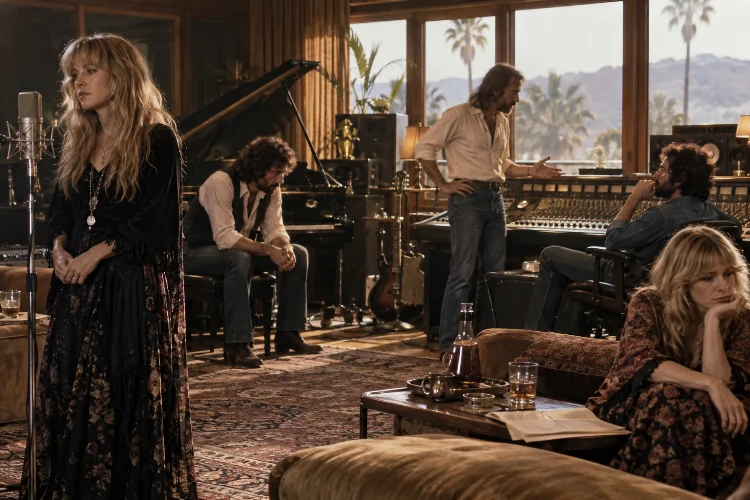
Imagine being in a band where almost everyone is going through a painful breakup. Relationships are falling apart, emotions are running high, and the people you’re arguing with are the same musicians you need to work with every single day.
Sounds like a recipe for disaster, right?
Well, that’s pretty much what happened when Fleetwood Mac recorded Rumours. Released on February 4, 1977, the album became one of the most celebrated recordings in rock history.
Its remarkable combination of emotional songwriting, polished production, memorable melodies, and complicated personal relationships created something that audiences still connect with decades later.
But the story behind Rumours by Fleetwood Mac goes much deeper than a few famous breakup songs.
Behind its beautiful vocal harmonies and sophisticated arrangements was a difficult recording process involving personal tension, technical challenges, countless overdubs, and extraordinary musical determination.
Somehow, the band transformed all that emotional chaos into an album that defined an era.
So, how did Fleetwood Mac turn heartbreak into a musical masterpiece?
Let’s explore the fascinating story behind the album’s production, the conflicts that shaped its songs, and the lasting influence it continues to have on rock music.
1. The Story Behind Fleetwood Mac’s Rumours Album
From British Blues Band to International Rock Superstars
Before Rumours became a global phenomenon, Fleetwood Mac had already experienced a complicated musical journey.
Founded in London in 1967, the group originally concentrated on British blues, with guitarist Peter Green playing a central creative role.
Over the following years, numerous lineup changes gradually transformed the band’s musical direction.
By the mid-1970s, Fleetwood Mac was moving away from its original blues identity toward a more melodic combination of rock, pop, and folk influences.
A major turning point arrived in 1975 when American musicians Lindsey Buckingham and Stevie Nicks joined drummer Mick Fleetwood, bassist John McVie, and keyboardist Christine McVie.
Their different musical backgrounds introduced fresh songwriting approaches and a distinctive vocal combination.
The resulting self-titled album, Fleetwood Mac, became a major commercial success.
Songs such as “Rhiannon,” “Landslide,” and “Say You Love Me” helped establish the group’s new identity.
Suddenly, Fleetwood Mac had become one of the most promising rock bands in America.
Expectations Were Higher Than Ever
Success created an entirely new challenge.
After their breakthrough, the band needed to produce another album that could maintain its growing popularity.
Record company expectations were increasing, concert schedules were demanding, and the musicians were dealing with major changes in their personal lives.
What should have been an exciting creative period gradually became emotionally exhausting.
Nevertheless, the group understood that it had something special.
The songwriting talent of Buckingham, Nicks, and Christine McVie offered an unusually diverse creative foundation.
Each songwriter brought a different emotional perspective, making it possible to explore relationship problems from multiple angles.
This creative diversity eventually became one of the album’s strongest qualities.
2. The Personal Conflicts That Shaped Rumours
Lindsey Buckingham and Stevie Nicks’ Breakup
Perhaps the most famous relationship breakdown involved Lindsey Buckingham and Stevie Nicks.
The two had been romantic and musical partners before joining Fleetwood Mac, but their relationship was deteriorating as the recording sessions developed.
Naturally, this made collaboration extremely difficult.
Imagine writing a song about your former partner and then asking that same person to contribute vocals or guitar to the recording.
That’s exactly the kind of situation Buckingham and Nicks repeatedly faced.
Buckingham’s “Go Your Own Way” expresses frustration and emotional separation through energetic guitar playing and direct songwriting.
Meanwhile, Nicks’ “Dreams” presents a more restrained perspective on the end of a relationship.
Both songs approach heartbreak differently, yet they work beautifully within the same album.
Their contrasting emotional viewpoints helped create a musical conversation that listeners could recognize without knowing every detail of the band’s history.
Christine and John McVie’s Marriage Problems
At the same time, Christine McVie and John McVie were experiencing the collapse of their marriage.
Their separation introduced another layer of tension into the recording process.
Christine expressed many of her feelings through songwriting, often choosing melodic and optimistic arrangements even when the underlying themes were complicated.
“Don’t Stop” became one of the clearest examples.
Rather than focusing entirely on disappointment, the song emphasizes moving forward and finding hope after difficult experiences.
Its upbeat musical character contrasts with the personal circumstances surrounding its creation.
John, meanwhile, still had to perform bass parts on songs connected to their relationship.
That required a degree of professionalism that would have been difficult for almost anyone.
Mick Fleetwood’s Personal Struggles
Mick Fleetwood wasn’t escaping the emotional turmoil either.
His marriage to Jenny Boyd was also experiencing serious difficulties during this period.
With multiple relationships unraveling, the studio environment became increasingly uncomfortable.
Arguments, misunderstandings, and emotional exhaustion complicated the band’s daily work.
Alcohol and drug use added further problems to an already stressful situation.
However, it’s important not to romanticize these circumstances.
The album succeeded because of exceptional musicianship, songwriting, and determination, not because personal suffering automatically produces great art.
The conflicts provided emotional material, but the musicians still had to transform those experiences into carefully constructed songs.
3. Inside the Complicated Production of Rumours
Recording at the Record Plant in Sausalito
Much of the album’s early recording took place at the Record Plant in Sausalito, California, during 1976.
The location was intended to give Fleetwood Mac some distance from their usual surroundings and outside distractions.
However, putting several emotionally stressed musicians together for extended recording sessions introduced its own complications.
The band worked with recording engineers and co-producers Ken Caillat and Richard Dashut, who became essential contributors to the finished record.
Rather than following a simple recording schedule, sessions often involved experimentation, repeated performances, and extensive adjustments.
Songs that sounded straightforward required considerable behind-the-scenes work.
According to accounts from the production team, achieving the desired drum sounds alone could consume hours of studio time.
The recording process eventually continued at other California facilities, including studios in Los Angeles.
The Challenges of Analog Multitrack Recording
Unlike modern producers who can record almost unlimited tracks on a computer, Fleetwood Mac worked with analog tape technology.
The production used 24-track recording equipment, allowing instruments and vocals to be captured and processed seperately.
Although this provided considerable flexibility for the time, the technology also introduced limitations.
Tape could physically wear down after repeated playback, recording, and overdubbing.
In fact, the album’s master tapes experienced serious deterioration during the lengthy sessions.
The production team faced the difficult task of preserving existing performances while transferring material between tape machines.
Engineers had to align recordings with remarkable precision, sometimes using manual synchronization methods.
These were problems that modern digital audio workstations largely eliminate.
Yet the limitations also encouraged careful listening and creative decision-making.
Layered Guitars and Vocal Harmonies
One of the album’s most recognizable production characteristics is its rich combination of guitars and vocals.
Lindsey Buckingham frequently constructed arrangements using multiple guitar parts, combining acoustic textures with electric riffs and melodic accents.
Rather than depending on flashy solos, he focused on creating rhythmic movement and memorable hooks.
The vocal arrangements were equally important.
Buckingham, Nicks, and Christine McVie possessed different vocal qualities that blended into a distinctive three-part sound.
Their harmonies made the songs feel warm and emotionally engaging, even when the musicians were experiencing serious disagreements.
It’s definately one of the most fascinating contradictions behind the recording.
The personal relationships were falling apart, but the musical arrangements often sounded remarkably unified.
4. How the Songs Turned Heartbreak Into Timeless Rock Music
“Dreams”: Simplicity With Emotional Depth
Written by Stevie Nicks, “Dreams” became Fleetwood Mac’s only single to reach number one on the US Billboard Hot 100.
Interestingly, its musical foundation is relatively simple.
The song relies on a steady drum groove, fluid bass movement, atmospheric keyboards, and restrained guitar arrangements.
Instead of filling every moment with complicated instrumental performances, the production allows the melody and vocals to remain central.
That restraint makes the recording feel intimate.
The emotional impact comes from its atmosphere rather than overwhelming intensity.
It’s also a valuable example of how a simple chord progression can become extraordinary through thoughtful arrangement.
“Go Your Own Way”: Frustration Turned Into Energy
While “Dreams” feels reflective, “Go Your Own Way” delivers a considerably more aggressive emotional statement.
Buckingham’s guitar playing gives the track its driving identity, while Mick Fleetwood’s unconventional drumming adds excitement and unpredictability.
The song’s rhythmic character was developed through extensive experimentation.
Producer Ken Caillat has described how the team worked to find the right drum approach and assembled Buckingham’s guitar solo from multiple recorded performances.
The finished recording sounds immediate and spontaneous, even though its construction required substantial studio work.
That balance between raw emotion and careful production became central to the album’s appeal.
“The Chain”: Five Musicians, One Powerful Statement
“The Chain” holds a special position in Fleetwood Mac’s catalog because all five band members receive songwriting credits.
The composition developed through the combination of different musical ideas rather than emerging as one completely finished song.
Its arrangement combines acoustic guitar, layered vocals, rhythmic tension, and an unforgettable bass-driven closing section.
John McVie’s famous bass line creates the foundation for the track’s dramatic ending.
As the arrangement builds, Buckingham’s guitar and Fleetwood’s drums increase the intensity.
The result feels like a musical representation of the group’s determination to remain connected despite serious personal problems.
Whether interpreted as a statement about relationships or the band itself, “The Chain” remains one of the album’s most powerful performances.
“Don’t Stop” and the Possibility of Moving Forward
Christine McVie’s “Don’t Stop” offers a noticeably different emotional perspective.
Instead of concentrating on bitterness, its lyrics encourage optimism and resilience.
The arrangement uses energetic piano, a memorable rhythm, and uplifting vocal harmonies to communicate that message.
This creates an intresting contrast within an album dominated by relationship difficulties.
Not every song treats heartbreak as the end of the story.
Some suggest that rebuilding your life is possible.
That emotional variety helped the album appeal to listeners experiencing different stages of their own relationships.
5. The Production Details That Made Rumours Sound Extraordinary
Why “Songbird” Needed a Different Recording Environment
One of the album’s most intimate songs is Christine McVie’s “Songbird.”
Rather than treating it like another conventional studio recording, Ken Caillat wanted to capture a more natural performance.
The production team recorded the song at Zellerbach Auditorium in Berkeley, California.
Christine performed at a grand piano, while microphones captured both the instrument and the surrounding room.
Caillat has explained that multiple microphone positions were used to preserve the auditorium’s natural acoustic character.
This gave the recording a spacious, intimate feeling.
The contrast with the album’s densely layered tracks was intentional and effective.
“Songbird” reminds listeners that emotional power doesn’t always require elaborate arrangements.
Sometimes, a voice, a piano, and the right acoustic environment are enough.
The Creative Experimentation Behind “You Make Loving Fun”
Christine McVie’s “You Make Loving Fun” demonstrates another side of the production.
The track combines an infectious groove with distinctive keyboard textures and tightly arranged vocals.
According to Caillat, the production team used a Clavinet processed through a wah-wah pedal to achieve part of its characteristic sound.
Mick Fleetwood reportedly operated the pedal while Christine played.
It’s a small but revealing example of the collaborative experimentation happening throughout the sessions.
The musicians were willing to try unusual methods when they believed a sound would improve the arrangement.
That creativity helped give individual tracks their own identities without weakening the album’s overall consistency.
Why “Gold Dust Woman” Sounds So Haunting
“Gold Dust Woman” closes the original album with a darker, more mysterious atmosphere.
Stevie Nicks’ vocal performance moves between vulnerability and dramatic intensity, while the arrangement uses unusual textures to create tension.
The production team experimented with atmospheric effects, including processed instruments and recordings of breaking glass.
These elements contribute to the song’s unsettling character.
Unlike the more accessible pop-rock arrangements elsewhere on the record, “Gold Dust Woman” embraces ambiguity.
It leaves listeners with an emotional impression rather than a simple resolution.
That creative decision helped make the album’s ending particularly memorable.
6. The Difficult Decisions Behind the Final Album
Why “Silver Springs” Was Removed
Not every recording completed during the sessions appeared on the original album.
One particularly painful decision involved Stevie Nicks’ composition “Silver Springs.”
The song was removed from the final tracklist, largely because of concerns about the album’s running time and sequencing.
Instead, the band included “I Don’t Want to Know,” a shorter and more upbeat composition.
“Silver Springs” appeared as the B-side of “Go Your Own Way.”
The decision disappointed Nicks, who considered the song personally meaningful.
Its exclusion demonstrates that album production involves more than recording strong material.
Producers and musicians must also decide how songs fit together as a complete listening experience.
Sometimes, that means making difficult choices about arrangements, running time, and overall pacing.
Balancing Different Songwriting Personalities
Another challenge was maintaining musical consistency across three principal songwriters.
Buckingham favored detailed guitar arrangements and energetic experimentation.
Nicks contributed poetic lyrics, atmospheric melodies, and a distinctive vocal personality.
Christine McVie brought sophisticated pop songwriting, melodic keyboards, and emotional clarity.
These approaches could easily have produced a disconnected collection of songs.
Instead, the band’s rhythm section, vocal harmonies, and carefully developed production style helped connect the material.
Mick Fleetwood’s drumming and John McVie’s bass playing provided a recognizable foundation throughout the record.
This combination created an album that moved naturally between soft rock, folk-inspired passages, and more energetic guitar-driven performances.
The diversity became an advantage rather than a problem.
7. Rumours’ Commercial Success and Lasting Rock Legacy
From Troubled Recording Sessions to Grammy Recognition
When Rumours arrived in February 1977, its commercial impact was enormous.
The album topped the Billboard 200 and produced several major hit singles.
“Dreams” reached number one in the United States, while “Don’t Stop,” “Go Your Own Way,” and “You Make Loving Fun” also became significant chart successes.
The record eventually sold tens of millions of copies worldwide, establishing itself among the best-selling albums in music history.
Its critical recognition was equally impressive.
At the 20th Annual Grammy Awards in 1978, Rumours won Album of the Year, defeating a highly competitive field that included the Eagles’ Hotel California and Steely Dan’s Aja.
The achievement demonstrated that personal storytelling and sophisticated production could connect with an enormous mainstream audience.
How Rumours Influenced Soft Rock and Pop-Rock Production
The album became an important reference point for melodic rock production.
Its combination of accessible songwriting, layered harmonies, carefully balanced instruments, and polished arrangements helped define the sound associated with late-1970s album-oriented rock.
Rather than emphasizing technical complexity, the musicians focused on making every musical element support the song.
That approach remains relevant to modern pop-rock, indie rock, and singer-songwriter recordings.
Producers can learn from the way bass lines, guitars, keyboards, and vocal harmonies interact without constantly competing for attention.
The arrangements sound rich, but they rarely feel unnecessarily crowded.
Another important lesson is the relationship between emotional authenticity and production quality.
The songs communicate vulnerability through carefully constructed performances, demonstrating that professional recording doesn’t have to eliminate emotional character.
A New Generation Rediscovered Fleetwood Mac
Perhaps the clearest evidence of the album’s enduring appeal arrived decades after its release.
In September 2020, a TikTok video featuring Nathan Apodaca skateboarding while listening to “Dreams” became a viral sensation.
The moment introduced the song to younger audiences and triggered a significant increase in streaming activity.
By October 2020, Rumours had returned to the top ten of the Billboard 200.
That’s an extraordinary achievement for an album released more than four decades earlier.
It also demonstrated how timeless songwriting can find new audiences through changing technology and listening habits.
The song didn’t need a modern remix or completely new arrangement to connect with listeners.
Its original groove, melody, and relaxed atmosphere were still enough.
Recognition as an Important Cultural Recording
In 2017, the Library of Congress selected Rumours for inclusion in the United States National Recording Registry.
The registry recognizes recordings considered culturally, historically, or aesthetically significant.
This acknowledgment helped confirm the album’s place beyond ordinary commercial success.
Its importance lies not only in memorable songs but also in the way its creation reflects the creative relationships, recording practices, and musical culture of its era.
For musicians and producers, the record remains an unforgetable example of what can happen when distinctive personalities work toward a shared artistic goal.
The group didn’t need perfect personal harmony to achieve musical excellence.
However, their story also reminds us that collaboration requires discipline, boundaries, and considerable emotional resilience.
What Modern Musicians Can Learn From Rumours
There are several valuable lessons hidden inside the album’s complicated history.
First, strong songwriting should remain the foundation of any recording project.
Sophisticated effects and expensive equipment can improve a production, but they cannot replace memorable melodies or meaningful lyrics.
Second, arrangement matters enormously.
Listen to “Dreams” and notice how the instruments provide space for Stevie Nicks’ vocal performance. Then compare it with “Go Your Own Way,” where aggressive guitars and dynamic drumming create a completely different atmosphere.
Both approaches work because their production decisions support the emotional character of the songs.
Finally, collaboration can bring together musical ideas that one songwriter might never develop independently.
“The Chain” demonstrates this beautifully.
Its memorable arrangement emerged through the contribution of different band members and the gradual combination of several musical ideas.
Modern musicians working in home studios can apply exactly the same principle through thoughtful collaboration, careful editing, and a willingness to experiment.
The goal isn’t to recreate the turmoil surrounding Fleetwood Mac.
It’s to learn how strong musical direction, distinctive performances, and detailed production can transform personal experiences into songs that resonate with others.
Rumours remains one of rock music’s greatest achievements because it combines emotional honesty with extraordinary musicianship and sophisticated production.
Despite painful relationship breakdowns and demanding studio sessions, Fleetwood Mac created an album filled with memorable melodies, expressive performances, and timeless songwriting.
From the reflective atmosphere of “Dreams” to the driving intensity of “Go Your Own Way,” every track contributes something distinctive to the listening experience.
Its commercial success, Grammy recognition, and continued popularity demonstrate just how powerful this combination became.
Want to appreciate the album on a deeper level? Listen to Rumours from beginning to end, paying attention to its harmonies, instrumental arrangements, and contrasting emotions.
You’ll discover why this 1977 masterpiece continues to inspire musicians, producers, and rock fans across generations.