
Imagine hearing a guitar solo so incredible that you genuinely wonder whether someone is playing a guitar at all.
The notes fly at impossible speeds, strange harmonics scream through the speakers, and the instrument suddenly sounds like something from another planet.
That’s exactly the kind of reaction Eddie Van Halen inspired when his band exploded onto the rock scene in 1978.
At a time when guitar legends like Jimi Hendrix, Eric Clapton, and Jimmy Page had already pushed electric guitar playing into exciting territory, Eddie arrived with an entirely different approach.
He combined lightning-fast techniques, innovative guitar modifications, powerful amplifier tones, and an almost playful sense of musical experimentation.
But Eddie Van Halen’s guitar innovations and their lasting rock legacy involve much more than flashy solos.
His ideas transformed electric guitar manufacturing, influenced generations of musicians, and helped define the sound of hard rock throughout the 1980s and beyond.
Even today, countless guitarists continue studying his playing style, equipment choices, and creative philosophy.
So, how did one musician change rock guitar so dramatically?
Let’s explore the innovations that made Eddie Van Halen a true musical revolutionary.
1. The 1978 Breakthrough That Changed Rock Guitar Forever
Before Eddie Van Halen became a household name, rock guitar already had a rich history of innovation.
Musicians like Jimi Hendrix, Ritchie Blackmore, Jeff Beck, and Jimmy Page had developed powerful approaches to electric guitar playing.
However, Eddie introduced a distinctive combination of technical precision, rhythmic creativity, and explosive energy.
The Arrival of Van Halen’s Debut Album
On February 10, 1978, Van Halen released their self-titled debut album.
The record featured Eddie on guitar, his brother Alex Van Halen on drums, Michael Anthony on bass, and David Lee Roth on vocals.
Songs such as “Runnin’ with the Devil,” “Ain’t Talkin’ ‘Bout Love,” and “You Really Got Me” showcased a band with remarkable musical chemistry.
But one instrumental track immediately stood apart from everything else.
That track was “Eruption.”
In less than two minutes, Eddie demonstrated a collection of guitar techniques that challenged expectations about the electric guitar.
Rapid-fire notes, dramatic pitch changes, and fluid tapping passages created a sound that seemed almost impossible to reproduce.
For aspiring guitarists, it was both intimidating and incredibly exciting.
Why His Playing Felt Different
Unlike musicians who focused almost entirely on technical complexity, Eddie combined advanced techniques with an infectious sense of rhythm.
His solos sounded energetic rather than mechanical.
His guitar riffs were aggressive but surprisingly melodic, and his performances often carried a playful personality.
The result was a musical style that appealed to both dedicated guitar enthusiasts and ordinary rock listeners.
Van Halen didn’t simply introduce another talented guitarist.
The band helped establish a fresh direction for mainstream hard rock.
2. Two-Handed Tapping: The Technique That Became His Signature
If there’s one guitar technique most closely associated with Eddie Van Halen, it’s two-handed tapping.
Although tapping existed before his career, Eddie transformed it into a highly influential component of modern rock guitar playing.
His performances introduced the technique to millions of listeners.
How Two-Handed Tapping Actually Works
Traditional guitar playing usually involves one hand pressing notes against the fretboard while the other hand picks the strings.
Two-handed tapping changes that relationship.
Instead of relying entirely on a pick, the guitarist uses fingers from both hands to strike notes directly onto the fretboard.
These movements combine hammer-ons and pull-offs to produce fast, connected melodic patterns.
Because both hands can generate notes, players can create wide intervals and rapid sequences that would be difficult using conventional picking alone.
Imagine playing three notes across a large section of the fretboard.
Your fretting hand handles the lower notes while a finger from your picking hand taps the highest note.
Repeating that pattern creates a smooth sequence without requiring every note to be picked.
It’s a relatively straightforward concept, but mastering its musical possibilities requires considerable coordination.
Why “Eruption” Became a Guitar Milestone
“Eruption” demonstrated how effectively tapping could be integrated into a complete guitar performance.
Rather than treating the technique as a simple trick, Eddie used it to develop flowing musical patterns.
His famous tapping passages combined speed, repetition, and harmonic movement.
Listeners were suddenly hearing guitar lines that resembled keyboard arpeggios or synthesizer sequences.
Interestingly, Eddie never claimed to have invented tapping itself.
Earlier musicians had explored related techniques, but his approach dramatically expanded their visibility within rock music.
After “Eruption,” countless aspiring guitarists began practicing two-handed tapping.
The technique became particularly popular among hard rock and heavy metal musicians during the 1980s.
Today, tapping appears in progressive rock, instrumental metal, fusion, and even acoustic guitar performances.
3. The Frankenstrat: Reinventing Electric Guitar Design
Eddie Van Halen wasn’t satisfied with simply playing commercially available guitars.
He wanted an instrument that matched his unusual musical requirements.
When existing models couldn’t deliver exactly what he imagined, he decided to build something himself.
The result became one of rock history’s most recognizable instruments.
Combining Different Guitar Designs
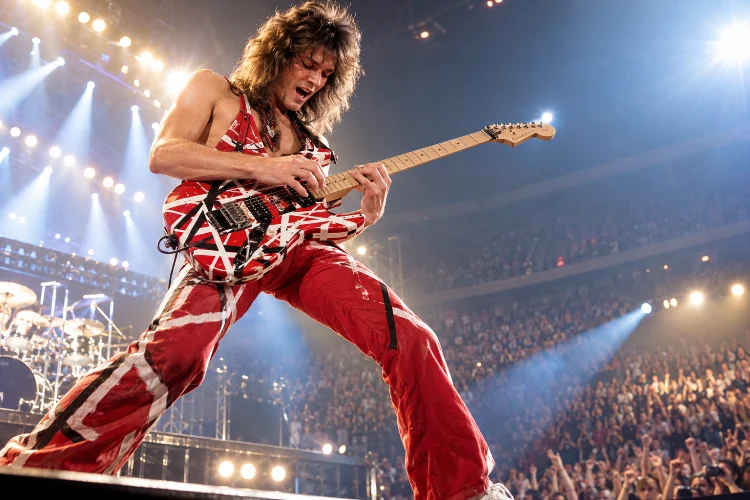
Eddie’s famous Frankenstein guitar, commonly called the Frankenstrat, combined features associated with different electric guitar designs.
He wanted the comfortable body shape and playability of a Stratocaster-style instrument while achieving the thicker output associated with Gibson-style humbucking pickups.
A humbucker uses two coils to reduce electrical interference while often producing a fuller sound than a traditional single-coil pickup.
This made it particularly useful for the powerful, overdriven tones Eddie preferred.
His homemade instrument incorporated a Stratocaster-style body, a humbucker, and relatively simple electronics.
Instead of filling the guitar with complicated controls, he focused on the features necessary for his playing style.
The instrument underwent numerous changes over time as Eddie continued modifying its components.
Its famous red, white, and black striped finish also became a visual symbol of his personality.
The Birth of the Superstrat Concept
The Frankenstrat helped popularize a guitar design philosophy that later became known as the Superstrat.
These instruments generally combined Stratocaster-inspired body shapes with features suited to heavier rock music.
Common characteristics included high-output pickups, fast-playing necks, and advanced tremolo systems.
During the 1980s, manufacturers increasingly offered guitars reflecting these preferences.
Brands such as Jackson, Charvel, Ibanez, and Kramer became associated with the growing demand for high-performance rock instruments.
Eddie’s homemade guitar wasn’t the sole origin of these developments, but it became one of their most influential examples.
His willingness to experimant with equipment also changed how musicians approached instrument customization.
Rather than accepting factory specifications, guitarists increasingly considered modifying pickups, hardware, and electronics to match their personal sound.
4. The Brown Sound: Creating a New Standard for Guitar Tone
Technical ability alone doesn’t explain Eddie Van Halen’s influence.
His guitar tone was equally revolutionary.
Many players still use the expression “brown sound” when describing the warm, saturated, and harmonically rich distortion associated with his early recordings.
The Role of Marshall Amplifiers
During Van Halen’s early career, Eddie became strongly associated with powerful Marshall tube amplifiers.
These amplifiers could produce natural overdrive when pushed to high output levels.
Unlike harsh distortion that obscures individual notes, Eddie’s early sound retained impressive definition and responsiveness.
The guitar could sound aggressive during heavy riffs while remaining expressive during melodic passages.
His amplifier setup also became the subject of considerable speculation.
Stories about modifications, voltage adjustments, and unusual recording techniques circulated among musicians attempting to reproduce his tone.
Although some of these experiments were real, the exact equipment configurations used across different recordings remain a topic of discussion.
The Surprising History of the Brown Sound
There’s an intresting detail behind the famous nickname.
Although guitarists commonly associate the brown sound with Eddie’s distorted guitar tone, he later explained that he had originally used the description when discussing his brother Alex’s snare drum.
He admired the warm, organic quality of Alex’s drumming.
Over time, however, the phrase became firmly connected to Eddie’s guitar sound.
Regardless of its origin, the expression now represents a recognizable style of rock guitar tone.
Effects Pedals and Dynamic Control
Eddie also used effects such as the MXR Phase 90, flangers, and Echoplex tape echo units.
These devices added movement, depth, and texture to his playing.
The Phase 90 became especially recognizable on songs such as “Ain’t Talkin’ ‘Bout Love.”
But the most important element wasn’t simply his equipment.
Eddie controlled tone through picking intensity, volume adjustments, muting, and expressive phrasing.
His sound demonstrated that great guitar tone depends on the relationship between the musician and the equipment.
Even an expensive amplifier cannot automatically reproduce the personality of a skilled guitarist.
5. Whammy Bars, Harmonics, and Revolutionary Rhythm Techniques
While tapping attracted enormous attention, Eddie’s playing involved many other innovations.
His mastery of the tremolo system, artificial harmonics, and rhythmic phrasing helped create his unmistakable musical identity.
Extreme Whammy-Bar Techniques
A guitar’s tremolo arm, often called a whammy bar, allows players to change string tension and pitch.
Before Eddie became famous, guitarists had already explored expressive vibrato and dramatic pitch effects.
However, he helped popularize especially aggressive applications.
One of his favorite techniques was the dive bomb.
By pushing the tremolo arm downward, he could make a note drop dramatically in pitch, creating a sound resembling a falling object or mechanical explosion.
He frequently combined this technique with harmonics to produce unusual screaming effects.
These sounds became defining characteristics of late-1970s and 1980s rock guitar.
The Importance of Locking Tremolo Systems
Extreme tremolo movements can cause tuning instability on conventional guitars.
Eddie’s playing encouraged the adoption of hardware designed to improve tuning reliability.
He became closely associated with Floyd Rose locking tremolo systems, which helped players perform dramatic pitch movements while maintaining better tuning stability.
Over time, locking tremolos became common on guitars designed for hard rock and metal.
His later equipment also included innovations such as the D-Tuna, a device designed to quickly change the lowest guitar string between standard E and drop D tuning.
These developments demonstrate how demanding playing techniques can influence guitar engineering.
Rhythm Guitar Was His Hidden Superpower
Many fans remember Eddie primarily for extraordinary solos.
However, his rhythm guitar playing deserves just as much recognition.
Songs such as “Panama,” “Unchained,” and “Hot for Teacher” feature intricate riffs with carefully controlled timing.
His rhythmic vocabulary extended beyond ordinary power chords.
He regularly incorporated suspended chords, compact chord voicings, muted notes, and blues-inspired shuffle patterns.
These details gave his playing a sense of movement that distinguished Van Halen from many other hard rock bands.
His riffs could sound complicated while remaining incredibly catchy.
That’s one reason musicians continue studying his rhythm guitar techniques decades after their original release.
6. Beyond Guitar Solos: Songwriting and Studio Innovation
Eddie Van Halen wasn’t interested in becoming famous exclusively for guitar solos.
He was also a songwriter, arranger, and musician who enjoyed exploring new sounds.
His creativity extended into keyboards, studio production, and collaborations outside conventional hard rock.
The Unexpected Success of “Jump”
One of the best examples appeared with Van Halen’s album 1984.
The album featured “Jump,” a song built around a prominent synthesizer riff rather than a traditional guitar introduction.
For a band known for explosive electric guitar performances, the decision represented an interesting creative departure.
Some band members initially questioned the direction.
However, the finished recording combined accessible pop songwriting with Van Halen’s established rock energy.
“Jump” reached number one on the Billboard Hot 100 in 1984.
Its success demonstrated Eddie’s ability to write memorable music beyond the technical boundaries of guitar-focused rock.
The Legendary “Beat It” Guitar Solo
Another defining moment came when Eddie contributed a guitar solo to Michael Jackson’s “Beat It.”
The song appeared on Jackson’s landmark 1982 album Thriller and became a major hit in 1983.
Producer Quincy Jones invited Eddie to contribute to the recording, creating one of popular music’s most recognizable guitar collaborations.
The solo combined rapid passages, expressive pitch effects, and Eddie’s distinctive tone.
His contribution helped connect hard rock guitar with a much broader pop audience.
It also demonstrated that virtuoso guitar playing could complement mainstream songwriting without overwhelming the song itself.
A Creative Approach to Recording
Eddie valued experimentation in the recording studio.
He explored different guitar sounds, arrangements, and production ideas, developing music through hands-on creativity.
His home recording facility, 5150 Studio, gave him greater freedom to pursue these interests.
The studio played an important role in the band’s evolving sound during the 1980s.
For Eddie, recording technology wasn’t simply a way to capture performances.
It was another environment where musical ideas could grow.
7. Eddie Van Halen’s Lasting Influence on Modern Guitarists
Few rock guitarists have influenced popular playing styles as extensively as Eddie Van Halen.
His impact can be heard across hard rock, heavy metal, progressive music, and instrumental guitar recordings.
The Rock & Roll Hall of Fame recognized Van Halen’s contribution by inducting the band in 2007.
Yet his influence goes far beyond awards and commercial success.
Creating a Generation of Guitar Heroes
Throughout the 1980s, many guitarists adopted techniques that Eddie had helped popularize.
Fast tapping passages, elaborate harmonics, and expressive whammy-bar movements became common features of rock guitar solos.
Players such as Steve Vai, Joe Satriani, and numerous later virtuosos developed their own distinctive approaches within a guitar culture that Eddie had profoundly influenced.
His popularity also helped create demand for specialized instruments, powerful amplifiers, and advanced guitar accessories.
The entire industry benefited from musicians seeking new ways to expand their technical abilities.
But imitation sometimes overlooked an essential aspect of Eddie’s playing.
He wasn’t simply trying to play faster than everyone else.
He wanted to create memorable music with an individual personality.
Practical Lessons Guitarists Can Learn Today
Modern musicians can learn plenty from Eddie without purchasing expensive signature equipment.
Start by studying his sense of rhythm.
Practice riffs from songs such as “Ain’t Talkin’ ‘Bout Love” and “Panama,” focusing on timing, muting, and musical dynamics rather than speed alone.
Next, explore basic tapping patterns.
Begin with a three-note sequence and gradually develop coordination between your fretting and picking hands.
Once the movement becomes comfortable, try using tapping to create short melodies.
Don’t worry if the results sound a little wierd at first.
Experimentation is part of developing an individual playing style.
You can also explore harmonics, controlled vibrato, and expressive pitch bending.
However, remember that Eddie’s playing was grounded in musical phrasing.
Technical exercises become much more useful when you apply them to actual songs.
Finally, experiment with your equipment thoughtfully.
Try adjusting pickup settings, amplifier controls, and effects to understand how each element changes your sound.
Eddie’s example encourages musicians to stay curious rather than blindly copying someone else’s settings.
Why His Legacy Continues
Eddie Van Halen died on October 6, 2020, at the age of 65.
His passing marked the loss of one of rock music’s most inventive performers.
Nevertheless, his recordings and inventions continue inspiring new generations.
His influence remains visible in custom guitar designs, modern amplifiers, instructional videos, and contemporary rock performances.
Perhaps most importantly, he changed the way musicians think about the possibilities of electric guitar.
He demonstrated that an instrument doesn’t have to remain limited by its original design or traditional playing methods.
Sometimes, the most exciting discoveries happen when musicians challenge those limitations.
And suprisingly, the next major guitar innovation could come from someone experimenting with an inexpensive instrument in their bedroom.
Eddie Van Halen transformed rock music through extraordinary guitar techniques, innovative instrument designs, and an endless willingness to experiment.
His mastery of two-handed tapping, expressive tremolo effects, powerful amplifier tones, and inventive rhythm playing helped establish a new standard for electric guitar performance.
Meanwhile, his Frankenstrat and equipment collaborations influenced guitar manufacturing for generations.
But his greatest contribution wasn’t simply technical innovation.
It was demonstrating that musical creativity can thrive when players challenge expectations and follow their own ideas.
His legacy continues to inspire guitarists who want to develop distinctive sounds and push their abilities further.
Want to experience his influence firsthand? Listen to “Eruption,” “Unchained,” “Panama,” and “Jump.” Study the details behind those recordings, pick up your guitar, and start developing your own musical voice.