

Some music never gets old. A powerful guitar riff, an unforgettable chorus, or an electrifying live performance can transport listeners across decades in seconds. That’s the magic behind the Legends of Rock, artists who transformed popular music and inspired generations of musicians around the world.
From the rebellious energy of early rock and roll to the experimental sounds of progressive rock and the explosive arrival of grunge, the genre has constantly reinvented itself.
This guide explores the legendary performers, essential albums, defining musical movements, and enduring cultural influence that continue to make rock music extraordinary.
1. The Origins of Rock Music and Its Cultural Revolution
Rock music didn’t suddenly appear when electric guitars became popular. Its foundations developed through decades of musical experimentation, cultural exchange, and artistic innovation.
Blues, rhythm and blues, gospel, country, and boogie-woogie all contributed to the sound that eventually became rock and roll.
How Rock and Roll Emerged in the 1950s
During the 1950s, American popular music experienced a remarkable transformation.
Artists began combining energetic rhythms, expressive vocals, and guitar-driven arrangements into performances that appealed strongly to younger audiences.
African American musicians played a foundational role in this development.
Chuck Berry helped establish the electric guitar as a defining instrument through memorable riffs, rhythmic playing, and storytelling about everyday life.
Songs such as “Johnny B. Goode” and “Roll Over Beethoven” demonstrated how guitar-centered arrangements could become exciting and commercially successful.
The Rock & Roll Hall of Fame recognizes Berry’s extraordinary influence on the genre’s formation and development.
Little Richard, Fats Domino, Sister Rosetta Tharpe, and Bo Diddley also contributed important musical ideas that shaped rock’s early identity.
Elvis Presley and the Rise of Rock Stardom
Elvis Presley became one of the most recognizable figures in early rock and roll.
His performances combined influences from blues, gospel, country, and rhythm and blues, introducing these sounds to a broad mainstream audience.
Presley’s expressive vocals, energetic stage movements, and distinctive image helped transform the relationship between popular musicians and their fans.
However, his success should be understood within the larger history of American music.
Many of the traditions associated with early rock had already been developed by Black musicians whose influence was essential to the genre’s evolution.
Recognizing this history provides a more complete understanding of rock’s cultural significance.
Why Rock Became a Symbol of Rebellion
Early rock and roll represented more than a new musical style.
For many young listeners, it expressed independence, excitement, and a desire to challenge established social expectations.
The music’s energetic rhythms and unconventional performances frequently created controversy among conservative audiences.
Radio broadcasts, records, television appearances, and live concerts helped turn the genre into an international cultural phenomenon.
Rock gradually became associated with changing youth identities, emerging fashion trends, and new forms of artistic freedom.
That connection between music and cultural expression remains one of the genre’s defining characteristics.
2. Legendary Rock Bands That Changed Music Forever
The 1960s and 1970s introduced bands that transformed rock into a sophisticated and commercially powerful art form.
These groups expanded songwriting possibilities, experimented with recording technology, and developed performances that influenced musicians across multiple generations.
The Beatles and the British Invasion
The Beatles fundamentally reshaped popular music through songwriting, studio experimentation, and musical reinvention.
John Lennon, Paul McCartney, George Harrison, and Ringo Starr developed a distinctive musical chemistry that allowed the band to explore numerous styles.
Their early recordings featured memorable melodies and energetic arrangements.
Later projects introduced more complex compositions, unusual instruments, and innovative production techniques.
Albums such as Revolver and Sgt. Pepper’s Lonely Hearts Club Band demonstrated how rock albums could function as cohesive artistic statements.
The Rock & Roll Hall of Fame inducted the Beatles in 1988, acknowledging their influence on modern music and the broader cultural landscape.
Their legacy extends beyond individual songs because they helped redefine what a successful rock band could accomplish creatively.
The Rolling Stones and Blues-Driven Rock
The Rolling Stones developed a grittier musical personality rooted in American blues and rhythm and blues.
Mick Jagger’s expressive stage presence and Keith Richards’ recognizable guitar riffs became central elements of the band’s identity.
Songs such as “Paint It, Black,” “Gimme Shelter,” and “(I Can’t Get No) Satisfaction” reflect different aspects of their musical evolution.
Unlike groups that pursued highly elaborate arrangements, the Stones often emphasized rhythmic energy, emotional expression, and raw instrumental interaction.
Their ability to incorporate country, psychedelia, disco, and other influences also helped sustain their creative relevance.
The Rock & Roll Hall of Fame highlights the band’s remarkable stylistic flexibility throughout its career.
Led Zeppelin and the Birth of Heavy Rock
Led Zeppelin helped establish a powerful musical foundation for hard rock and heavy metal.
Jimmy Page’s guitar work, Robert Plant’s dramatic vocals, John Paul Jones’ musical versatility, and John Bonham’s explosive drumming created an unmistakable sound.
The band combined blues, folk, psychedelic experimentation, and increasingly ambitious arrangements.
Songs such as “Whole Lotta Love,” “Kashmir,” and “Stairway to Heaven” demonstrate their range.
Some compositions emphasize enormous guitar riffs, while others develop gradually through acoustic passages and complex instrumental sections.
Led Zeppelin’s influence also extended into recording techniques and large-scale concert production.
Their Rock & Roll Hall of Fame profile describes how the band expanded rock’s musical possibilities and influenced later heavy music.
Queen and Theatrical Rock Performance
Queen transformed theatrical presentation into a defining element of rock entertainment.
Freddie Mercury’s vocal range and commanding stage personality combined with Brian May’s distinctive guitar arrangements, Roger Taylor’s energetic drumming, and John Deacon’s melodic bass playing.
The band explored hard rock, pop, opera-inspired arrangements, and elaborate studio production.
“Bohemian Rhapsody” remains a striking example of their willingness to challenge conventional song structures.
Meanwhile, “We Will Rock You” and “We Are the Champions” demonstrate how simple musical ideas can become enormous communal experiences.
Queen’s approach proved that technical ambition and broad audience appeal could coexist within rock music.
3. Iconic Rock Guitarists and Unforgettable Performers

Although rock depends on collaboration, individual performers sometimes change how an entire instrument or musical style is understood.
Innovative guitarists, vocalists, and songwriters have repeatedly introduced techniques that later become standard features of popular music.
Jimi Hendrix and the Electric Guitar Revolution
Jimi Hendrix transformed electric guitar performance through expressive technique, unusual sound effects, and adventurous improvisation.
His approach incorporated feedback, distortion, blues phrasing, and psychedelic experimentation.
Rather than treating the guitar simply as an accompaniment instrument, Hendrix explored its potential as a complete expressive voice.
Songs such as “Purple Haze,” “Little Wing,” and “Voodoo Child (Slight Return)” demonstrate different aspects of his artistry.
His performances could shift from delicate melodic passages to extraordinary sonic intensity.
The Rock & Roll Hall of Fame credits Hendrix with dramatically expanding the artistic and technical possibilities of electric guitar playing.
Eric Clapton, Jeff Beck, and Jimmy Page
Eric Clapton helped popularize blues-inspired lead guitar through his work with the Yardbirds, John Mayall’s Bluesbreakers, Cream, and his solo career.
His expressive phrasing demonstrated that emotional clarity could be just as powerful as technical complexity.
Jeff Beck explored a different direction, incorporating unusual textures, precise dynamic control, and imaginative instrumental expression.
Jimmy Page combined memorable riffs with sophisticated studio arrangements and layered guitar recordings.
Although their musical approaches differed, all three contributed to the evolving language of electric guitar.
Their influence can still be heard in modern blues-rock, progressive metal, and instrumental guitar music.
David Bowie and the Power of Reinvention
David Bowie demonstrated how rock musicians could continuously reinvent their sound and artistic identity.
His work crossed glam rock, experimental music, electronic production, soul, and alternative styles.
Bowie also treated fashion, visual presentation, and fictional characters as meaningful parts of musical storytelling.
His Ziggy Stardust persona challenged conventional expectations surrounding celebrity, identity, and performance.
This creative flexibility became an inspiration for artists far beyond traditional rock.
Bowie’s career illustrates that innovation sometimes requires abandoning familiar formulas rather than perfecting them indefinitely.
The Importance of Distinctive Vocal Personalities
A remarkable rock singer doesn’t necessarily need the widest vocal range or most technically polished performance.
Emotional conviction, distinctive phrasing, and recognizable tone can be equally important.
Janis Joplin brought extraordinary intensity to blues-influenced rock, while Robert Plant developed a dramatic vocal approach suited to Led Zeppelin’s powerful arrangements.
Freddie Mercury combined theatrical expression with exceptional musical versatility.
These performers demonstrate that legendary status often emerges from a unique artistic personality rather than one measurable technical ability.
4. Essential Rock Albums That Defined Generations
Individual songs may introduce listeners to a band, but albums often reveal the full scope of an artist’s creativity.
The most influential records frequently introduce production techniques, songwriting approaches, or musical concepts that inspire future generations.
Sgt. Pepper’s Lonely Hearts Club Band – The Beatles (1967)
Released in 1967, Sgt. Pepper’s Lonely Hearts Club Band helped demonstrate how popular albums could be constructed as immersive artistic experiences.
The Beatles combined orchestral textures, unusual recording effects, and inventive songwriting into a recognizable musical identity.
The album encouraged listeners to experience a collection of songs as a broader creative statement.
Its cultural importance was formally recognized when the Library of Congress selected it for the National Recording Registry in 2003.
For aspiring musicians, the album provides a fascinating study of arrangement, experimentation, and ambitious studio production.
Are You Experienced – The Jimi Hendrix Experience (1967)
Are You Experienced introduced listeners to a radically expressive approach to electric guitar.
The record combined psychedelic experimentation with blues-influenced songwriting and powerful instrumental performances.
Its musical textures challenged familiar recording conventions of the period.
The album was released in the United Kingdom on May 12, 1967, and later appeared in the United States with a different track selection.
Its influence on guitar-driven music remains widely recognized by musicians and historians.
The Dark Side of the Moon – Pink Floyd (1973)
The Dark Side of the Moon represents one of progressive rock’s most recognizable achievements.
Released in 1973, the album explores themes including time, mortality, money, and psychological pressure.
Pink Floyd combined atmospheric instrumentation, expressive guitar work, synthesizers, and carefully constructed sonic transitions.
Rather than presenting disconnected tracks, the album develops a continuous listening experience.
Its production techniques became an important reference point for later progressive and atmospheric rock recordings.
The Library of Congress added the album to the National Recording Registry in 2012, recognizing its historical and cultural significance.
Led Zeppelin IV – Led Zeppelin (1971)
Released in 1971, Led Zeppelin IV includes some of the band’s most recognizable compositions.
The record moves between acoustic arrangements, heavy blues-rock, folk influences, and powerful guitar-driven performances.
“Stairway to Heaven” demonstrates how a song can gradually expand from a restrained beginning into an intense instrumental climax.
“Black Dog” and “Rock and Roll” highlight the group’s rhythmic confidence and energetic interplay.
The album remains a useful example of how different musical styles can coexist within a consistent artistic identity.
Nevermind – Nirvana (1991)
Nevermind helped bring alternative rock and the Seattle grunge movement into mainstream popular culture.
Kurt Cobain’s songwriting combined melodic hooks with emotional intensity and deliberately rough-edged guitar sounds.
Songs such as “Smells Like Teen Spirit” and “Come as You Are” offered a different aesthetic from the polished commercial rock that dominated much of the preceding decade.
The album’s success helped change record-industry expectations about underground and alternative music.
Nirvana’s Rock & Roll Hall of Fame profile describes Nevermind as a central force behind the alternative-rock revolution of the early 1990s.
5. Rock Music Genres and the Evolution of Musical Styles
Rock has never been a single, fixed musical formula.
Its history includes numerous overlapping movements, each responding to earlier traditions while introducing new creative possibilities.
Hard Rock and Heavy Metal
Hard rock emphasizes powerful guitar riffs, prominent drums, and energetic vocal performances.
Bands such as AC/DC and Deep Purple helped establish a sound associated with intensity and direct musical expression.
Heavy metal developed further through darker musical textures, heavier guitar tones, and increasingly distinctive rhythmic approaches.
Black Sabbath played a foundational role in this transformation.
Their early recordings introduced ominous atmospheres and powerful riffs that influenced countless metal bands.
The Rock & Roll Hall of Fame recognizes the group’s importance in establishing heavy metal as a major musical movement.
Progressive Rock and Musical Experimentation
Progressive rock expanded conventional songwriting through complex arrangements, extended compositions, and unusual time signatures.
Groups such as Pink Floyd, Yes, Genesis, and King Crimson explored musical ideas influenced by classical music, jazz, and experimental production.
Their albums often emphasized conceptual continuity and detailed instrumental arrangements.
Some listeners love progressive rock’s ambitious structures, while others prefer the simplicity of traditional rock and roll.
Both approaches demonstrate different strengths.
Rock’s flexibility allows straightforward three-minute songs and elaborate twenty-minute compositions to exist within the same broad tradition.
Punk Rock and the Return to Simplicity
Punk rock emerged prominently during the 1970s as an energetic alternative to increasingly elaborate mainstream rock production.
Bands such as the Ramones, the Clash, and the Sex Pistols emphasized urgency, direct expression, and a rebellious artistic attitude.
Punk frequently relied on short songs, memorable riffs, and stripped-down arrangements.
Its cultural importance also extended into fashion, independent record labels, and do-it-yourself creative communities.
The movement demonstrated that technical virtuosity wasn’t a requirement for meaningful musical expression.
Sometimes, urgency and authenticity could communicate more effectively than elaborate production.
Grunge, Alternative Rock, and Modern Influences
Grunge developed through the independent rock scene of the Pacific Northwest.
Its sound combined influences from punk, heavy metal, and alternative music.
Nirvana, Soundgarden, Alice in Chains, and Pearl Jam helped introduce this style to larger audiences.
Alternative rock subsequently expanded into numerous directions, incorporating electronic music, post-punk, indie rock, and experimental influences.
Modern artists continue borrowing from these traditions.
The result is an evolving musical landscape where classic rock influences remain relevant even when newer performers approach them differently.
6. Legendary Rock Concerts and the Art of Live Performance
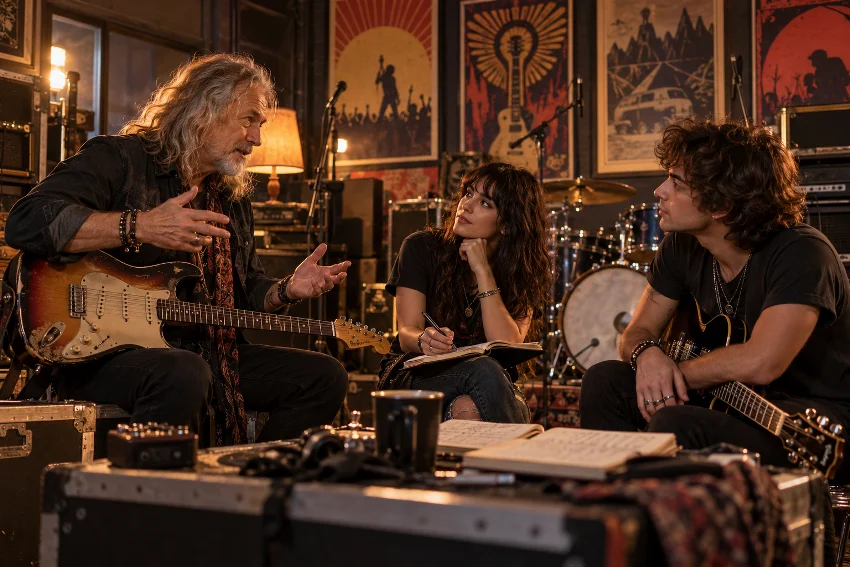
Studio recordings can establish an artist’s reputation, but live performances often transform musicians into cultural icons.
Rock concerts combine sound, visual presentation, audience participation, and spontaneous musical interaction.
Some performances become historically significant because they capture a particular cultural moment.
Woodstock 1969 and the Counterculture Movement
The Woodstock Music and Art Fair took place in August 1969 in Bethel, New York.
Featuring artists such as Jimi Hendrix, Janis Joplin, Santana, and the Who, the festival became associated with the era’s counterculture movement.
Its cultural symbolism eventually extended far beyond the actual concerts.
Hendrix’s interpretation of the American national anthem remains one of the festival’s most widely discussed performances.
The combination of distorted guitar sounds and expressive improvisation demonstrated how instrumental music could communicate powerful emotions and invite political interpretation.
Woodstock helped reinforce the idea that a music festival could represent a broader generational experience.
Queen at Live Aid 1985
Queen’s performance at Live Aid on July 13, 1985, remains one of rock’s most celebrated concert appearances.
Freddie Mercury demonstrated remarkable audience control through powerful vocals, confident stage movement, and direct crowd interaction.
Rather than relying exclusively on elaborate production effects, the band concentrated on familiar songs and compelling performance energy.
The crowd’s response became part of the musical experience itself.
For aspiring performers, Queen’s Live Aid appearance offers valuable lessons about pacing, audience engagement, and creating memorable moments within a limited performance schedule.
The Importance of Live Musical Chemistry
Memorable concerts depend on more than technical perfection.
Musicians constantly communicate through timing, improvisation, and subtle changes in intensity.
A guitarist may extend a solo while the drummer adjusts the rhythmic energy to match.
A singer might temporarily stop performing to allow the audience to take over a chorus.
These unpredictable moments create experiences that recorded performances cannot fully reproduce.
This is one reason live recordings remain popular among dedicated rock fans.
They reveal the unique interaction between musicians and audiences at a particular moment in time.
7. The Lasting Legacy of Rock Music in Modern Culture
Rock’s influence extends beyond recordings, concerts, and famous musicians.
The genre helped transform fashion, visual art, recording technology, popular culture, and the way audiences relate to public performers.
Its musical traditions continue appearing in contemporary entertainment.
How Classic Rock Influences Modern Artists
Many contemporary musicians incorporate ideas established by earlier rock performers.
Blues-influenced guitar riffs remain common in alternative rock, while the dynamic contrasts popularized by grunge continue appearing in modern recordings.
Rock’s influence can also be heard in pop, hip-hop, electronic music, and film soundtracks.
Artists frequently combine distorted guitars with electronic production or incorporate traditional rock arrangements into contemporary songwriting.
This musical exchange demonstrates that genres rarely evolve independently.
New styles often emerge through the reinterpretation of existing traditions.
Rock Fashion, Identity, and Popular Culture
Rock musicians helped popularize recognizable visual styles.
Leather jackets, denim, distinctive hairstyles, dramatic makeup, and band merchandise became associated with different movements.
Glam rock performers explored theatrical costumes and unconventional identities, while punk musicians developed deliberately confrontational fashion.
These visual traditions influenced designers, photographers, filmmakers, and later music subcultures.
The relationship between appearance and music also demonstrated how artistic identity could extend beyond sound.
For many fans, clothing and personal style became ways of expressing their connection to particular artists and communities.
Streaming Platforms and Musical Rediscovery
Digital music platforms have changed how listeners discover older recordings.
Instead of depending entirely on radio programming or physical record collections, audiences can explore decades of music through online catalogs.
Classic songs may gain renewed attention through films, television series, games, and social media.
This creates opportunities for younger listeners to discover influential performers outside their original historical context.
However, digital convenience also changes listening habits.
Individual tracks are easier to discover, while the original sequencing and artwork of complete albums may receive less attention.
Exploring full-length records remains a rewarding way to understand an artist’s creative intentions.
Preserving Rock History for Future Generations
Music preservation helps ensure that historically significant recordings remain accessible.
Archives, museums, record labels, and collectors contribute to this work by maintaining recordings, photographs, instruments, and performance documentation.
The Library of Congress maintains the National Recording Registry to recognize recordings considered culturally, historically, or aesthetically significant.
Preservation also requires acknowledging the many contributors whose work shaped musical history.
Session musicians, producers, engineers, songwriters, and early pioneers all deserve recognition alongside famous performers.
Understanding their contributions creates a richer and more accurate picture of rock’s development.
The genre’s enduring appeal comes from its diversity, emotional honesty, and continual reinvention.
The Legends of Rock transformed music through groundbreaking albums, unforgettable performances, and fearless artistic experimentation. Their influence continues across modern genres, inspiring new generations of musicians and passionate listeners.
From Chuck Berry’s pioneering guitar riffs to Nirvana’s alternative revolution, rock’s history offers endless discoveries. Explore a classic album, revisit a legendary concert, and discover the extraordinery artists who made rock music timeless.