
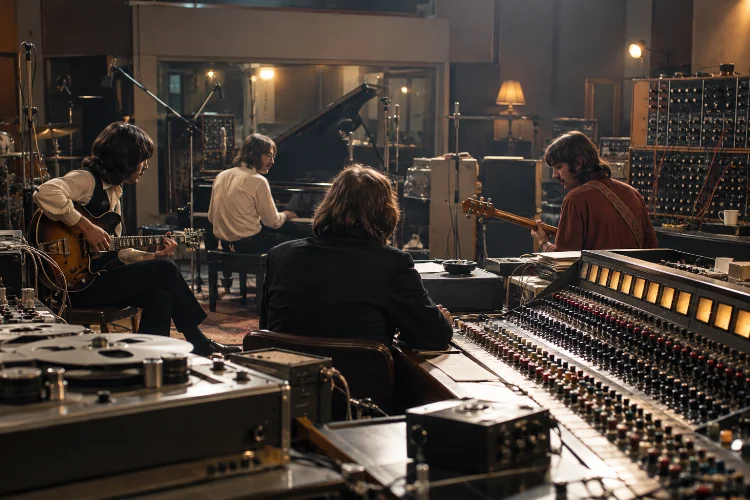
Imagine walking into a recording studio in 1969, surrounded by enormous tape machines, complicated mixing consoles, and musicians experimenting with sounds nobody had heard before.
There are no laptops, digital audio workstations, or convenient editing shortcuts. Every creative decision requires patience, technical knowledge, and sometimes a little bit of luck.
Now imagine those musicians are The Beatles.
Released on September 26, 1969, Abbey Road became one of the most celebrated albums in popular music history. Beyond its unforgettable songs and iconic zebra-crossing cover, the record represented a remarkable achievement in studio experimentation.
The Beatles’ Abbey Road recording techniques combined emerging technology with imaginative production methods, helping create a polished yet adventurous sound that continues to inspire musicians and audio engineers.
Working alongside producer George Martin and engineers including Geoff Emerick and Phil McDonald, the band explored eight-track recording, synthesizers, complex vocal arrangements, and creative tape editing.
The results were extraordinary.
From the futuristic textures of “Here Comes the Sun” to the flowing medley that dominates the album’s second side, Abbey Road demonstrated how the recording studio could become an instrument in its own right.
Let’s explore the techniques that made this legendary album sound so different.
1. Why Abbey Road Marked a Turning Point in Beatles Recording History
The Beatles’ Final Major Studio Project
By 1969, The Beatles had already changed popular music several times.
Albums such as Revolver and Sgt. Pepper’s Lonely Hearts Club Band demonstrated how recording technology could expand songwriting far beyond what musicians could reproduce during a traditional live performance.
However, Abbey Road represented another important chapter.
Following the difficult Get Back sessions, John Lennon, Paul McCartney, George Harrison, and Ringo Starr returned to carefully constructed studio recording.
Although Let It Be would eventually become their final released studio album in 1970, Abbey Road was the last album they recorded together.
This distinction matters because the record captures an experienced band applying years of creative experimentation to a sophisticated production environment.
Rather than abandoning the musical discoveries of their earlier albums, they refined them.
George Martin’s Role in the Album’s Sound
Producer George Martin played a crucial role in translating the band’s musical ideas into finished recordings.
His knowledge of arrangement, orchestration, and recording technology helped connect traditional musicianship with increasingly experimental studio methods.
Martin was particularly important when working on the album’s ambitious second-side medley.
His ability to develop orchestral arrangements and coordinate complicated recording sessions made otherwise difficult musical ideas achievable.
But the record wasn’t simply the work of one producer.
Engineers Geoff Emerick and Phil McDonald, along with other technical staff, helped capture and shape the performances.
The combination of musical imagination and engineering expertise created the foundation for the album’s remarkable sonic character.
2. Eight-Track Recording Changed How the Beatles Built Their Songs
Moving Beyond Four-Track Limitations
One of the biggest technical advantages during the Abbey Road sessions was greater access to eight-track recording equipment.
During much of their earlier career, The Beatles had worked with four-track tape machines.
These systems allowed engineers to record four separate tracks, but complicated arrangements frequently required several instruments or vocals to be combined onto a single track.
This process, known as bouncing or reduction mixing, created additional recording space while sacrificing some individual control.
Eight-track recording provided greater flexibility.
With eight available tracks, engineers could keep more instruments and vocals seperate during the production process.
That meant better opportunities to adjust volume, equalization, and effects when creating the final mix.
Importantly, The Beatles had already experimented with eight-track recording during earlier sessions, including work at Trident Studios in 1968.
Abbey Road was not their first encounter with the technology, but it was the first Beatles album made extensively around this more flexible recording environment.
How Multitracking Expanded Musical Arrangements
Imagine recording a song with drums, bass, two guitars, keyboards, lead vocals, and background harmonies.
On a four-track machine, combining several of those elements would usually be unavoidable.
Eight-track recording made the process considerably easier, although complex arrangements could still exhaust the available space.
Songs such as “Something” and “Here Comes the Sun” benefited from the ability to develop instrumental arrangements through successive overdubs.
The musicians could record a basic performance and gradually expand it with additional guitars, vocals, keyboards, and orchestral elements.
This method encouraged experimentation because musical decisions didn’t always have to be finalized during the initial performance.
For modern producers, this workflow sounds completely normal.
However, in 1969, managing such elaborate arrangements with analog tape required careful planning and excellent engineering.
3. The EMI TG12345 Mixing Console Created a New Sonic Character
From Vacuum Tubes to Transistor Technology
Another major technological development was the introduction of EMI’s TG12345 mixing console.
Earlier Beatles recordings had commonly used REDD consoles built around vacuum-tube technology.
These desks contributed to the warm, characteristic sound associated with the band’s recordings throughout much of the 1960s.
The TG12345 represented a different approach.
Designed using solid-state transistor technology, the console offered expanded recording capabilities, more sophisticated signal control, and a distinctive tonal character.
According to Abbey Road Studios, the TG12345 was the first transistorized mixing desk designed by EMI and was used to record and mix Abbey Road.
The new console offered significantly more microphone inputs than its predecessors.
It also incorporated compression and limiting capabilities on individual channels, providing engineers with greater flexibility when controlling sound dynamics.
Why the Album Sounds So Polished
Many listeners notice that Abbey Road has a remarkably smooth and detailed sound compared with some earlier Beatles recordings.
Part of that character came from the upgraded console and recording system.
The additional technical flexibility allowed engineers to capture instruments with greater separation while shaping the overall arrangement more precisely.
Listen to “Come Together.”
Paul McCartney’s bass line sounds deep and prominent, while Ringo Starr’s drums maintain a distinctive, controlled presence.
The vocals and guitars occupy their own musical spaces without making the recording feel overcrowded.
Of course, the console wasn’t solely responsible for the album’s sound.
Musician performance, microphone placement, tape saturation, compression, and mixing decisions all played important roles.
Still, the TG12345 became an essential part of the album’s sonic identity.
Its influence extended beyond The Beatles, with later versions contributing to other landmark recordings, including Pink Floyd’s The Dark Side of the Moon.
4. Moog Synthesizers Brought Futuristic Sounds Into Popular Music
George Harrison’s Fascination With Electronic Instruments
One of the most distinctive Abbey Road studio innovations involved the Moog synthesizer.
Today, synthesizers appear everywhere, from electronic dance music to film soundtracks.
In 1969, however, these instruments remained relatively unfamiliar to mainstream audiences.
George Harrison had become interested in the possibilities of electronic sound and acquired a large Moog modular synthesizer.
Unlike modern digital keyboards, early Moog systems required musicians to manipulate oscillators, filters, cables, and other components to create sounds.
The instrument wasn’t particularly simple to operate.
However, its unusual capabilities offered musical textures that conventional guitars and keyboards couldn’t easily reproduce.
Harrison introduced Moog sounds into four songs on Abbey Road: “Here Comes the Sun,” “Because,” “Maxwell’s Silver Hammer,” and “I Want You (She’s So Heavy).”
Electronic Textures in “Here Comes the Sun”
“Here Comes the Sun” provides an excellent example of electronic technology supporting an otherwise organic arrangement.
The song begins with Harrison’s acoustic guitar and develops through carefully arranged vocals and instruments.
As the recording progresses, the Moog synthesizer introduces a distinctive melodic texture.
Instead of overwhelming the acoustic foundation, the electronic sounds complement the song’s optimistic atmosphere.
This combination was particularly effective because the synthesizer didn’t feel disconnected from the composition.
It became another musical voice within the arrangement.
How “I Want You (She’s So Heavy)” Used Electronic Noise
The darker side of Moog experimentation appears in “I Want You (She’s So Heavy).”
The song features a repetitive guitar progression that grows increasingly intense as the recording continues.
Electronic white noise contributes to its overwhelming, almost hypnotic character.
Rather than using the synthesizer exclusively for recognizable melodies, the band incorporated noise as part of the musical atmosphere.
The song also ends with an unexpectedly abrupt tape edit.
Instead of fading naturally, the recording suddenly stops, leaving the listener with a striking sense of interruption.
It’s a brilliant example of how studio production can become part of a composition’s emotional impact.
5. Vocal Layering and Harmony Techniques Reached New Levels
The Nine-Voice Arrangement of “Because”
If you want to hear how multitrack recording transformed The Beatles’ vocal arrangements, listen to “Because.”
The song features some of the most beautiful harmonies in the band’s catalog.
John Lennon, Paul McCartney, and George Harrison recorded a three-part vocal harmony together.
They then recorded the same three-part arrangement two additional times.
The resulting production created the effect of nine voices performing simultaneously.
This technique is known as vocal multitracking.
By layering separate performances, engineers could create a richer vocal texture than the original three singers could produce in a single live take.
The result sounds almost like a small choir.
Why Vocal Doubling Sounds Different From Simply Singing Louder
Recording the same vocal part multiple times doesn’t merely increase its volume.
Each performance contains tiny differences in timing, pitch, articulation, and breathing.
When these recordings are combined, the variations create a thicker, more complex sound.
On “Because,” those subtle differences contribute to the recording’s floating, dreamlike quality.
George Martin carefully arranged the harmonies, while the engineering team ensured that the separate layers remained balanced.
Interestingly, the original backing track also featured an electric harpsichord played by Martin, alongside Lennon’s guitar and McCartney’s bass.
The instrumental arrangement is restrained, leaving plenty of room for the voices.
Lessons for Modern Vocal Producers
Modern recording software makes vocal layering incredibly accessible.
A musician can record multiple harmonies using an inexpensive microphone and arrange them within a digital audio workstation.
However, the principles behind “Because” remain valuable.
Start with a strong primary vocal performance, then add carefully chosen harmony parts.
Record genuine additional takes rather than relying entirely on duplicated audio files.
Finally, experiment with balance and stereo placement to create a natural sense of depth.
The objective isn’t simply to make vocals louder.
It’s to create an emotional texture that supports the song.
6. Tape Editing and the Revolutionary Abbey Road Medley
Turning Separate Songs Into One Continuous Experience
Perhaps the album’s most ambitious production achievement is the extended medley on its second side.
Beginning with “You Never Give Me Your Money,” the sequence moves through several interconnected compositions before reaching the dramatic conclusion of “The End.”
The idea sounds straightforward today.
However, constructing such a continuous musical experience with analog recording equipment required considerable technical precision.
The Beatles had to consider musical transitions, timing, tonal relationships, and the emotional progression between songs.
Some sections were recorded as connected performances, while others required additional editing and mixing.
The result became one of the most recognizable extended sequences in popular music.
Crossfades, Tape Splicing, and Creative Transitions
Unlike modern digital editing, analog tape manipulation was a physical process.
Engineers could cut magnetic tape and join sections together using special editing tape.
They also created crossfades by gradually reducing the volume of one recording while introducing another.
These techniques helped connect the individual compositions of the medley.
For example, the transition from “You Never Give Me Your Money” into “Sun King” required careful mixing and additional sound effects.
Paul McCartney prepared tape loops that contributed to the transition’s atmosphere.
The final crossfade was completed during the album’s August 1969 mixing sessions.
What makes the sequence impressive is how natural the transitions feel.
Although the underlying material includes different songs, the completed arrangement gives listeners the impression of a larger musical journey.
The Unexpected Story Behind “Her Majesty”
One of the album’s most charming production accidents involves “Her Majesty.”
The short McCartney composition was originally intended to appear within the second-side medley.
During editing, it was removed from that position.
Engineer John Kurlander preserved the discarded section by attaching it to the end of the tape reel, separated from the main program by leader tape.
The unexpected placement eventually became part of the released album.
Consequently, “Her Majesty” appears after a period of silence following “The End.”
This accidental decision became an early and influential example of an unlisted or hidden album track.
It’s a wonderful reminder that some of recording history’s most memorable creative decisions weren’t originally planned.
7. Stereo Mixing, Drum Recording, and Orchestral Arrangements
Making Better Use of the Stereo Field
Stereo recording allows different musical elements to occupy positions across a left-to-right soundstage.
While The Beatles had released stereo recordings before Abbey Road, the new production equipment provided opportunities for more sophisticated spatial arrangements.
Instead of thinking only about individual instrument volumes, engineers could consider where sounds should appear in relation to one another.
This helped create the album’s spacious presentation.
Guitars, vocals, percussion, and keyboards could interact without always occupying the same apparent location.
The results are particularly noticeable when listening through good headphones.
Ringo Starr’s Drums on “The End”
“The End” features a rare Beatles drum solo performed by Ringo Starr.
The recording also demonstrates the band’s increasingly sophisticated drum production.
Engineer Geoff Emerick used an expanded microphone arrangement to capture the kit, dedicating two available tape tracks to the drums for the solo.
This allowed the performance to be recorded with genuine stereo information.
The arrangement emphasized both the physical movement of the drums and the musical importance of Starr’s playing.
After the drum solo, the song moves into alternating guitar solos from McCartney, Harrison, and Lennon.
The sequence creates an exciting musical conversation between the band’s members.
George Martin’s Orchestral Arrangements
Traditional orchestral instruments also contributed significantly to Abbey Road.
Songs such as “Something,” “Golden Slumbers,” and “Carry That Weight” feature carefully arranged strings or other orchestral textures.
George Martin’s arrangements helped connect the band’s rock instrumentation with a larger, cinematic sound.
These additions weren’t simply decorative.
They created dramatic contrasts, reinforced melodic ideas, and helped certain sections feel more emotionally expansive.
In “Golden Slumbers,” the orchestration supports McCartney’s vocal performance before the music transitions into the communal energy of “Carry That Weight.”
The combination of orchestra, rock band, and studio editing creates an unforgetable musical experience.
It also demonstrates how ambitious arrangements can remain accessible when each element supports the overall composition.
8. How Abbey Road Influenced Modern Music Production
The Studio Became More Than a Place to Record
The Beatles didn’t invent multitracking, electronic synthesis, or tape editing.
Many artists and engineers had already experimented with these technologies.
What made Abbey Road remarkable was how effectively the band combined established techniques with new equipment and imaginative songwriting.
The recording studio became a creative environment where arrangements could be developed, transformed, and reconstructed.
This approach helped reinforce an important idea: a finished recording doesn’t have to reproduce a live performance exactly.
It can exist as a unique artistic creation.
That philosophy continues to influence rock, pop, electronic music, and experimental production.
Abbey Road Techniques in Today’s Digital Workflows
Modern producers have access to tools that would have seemed extraordinary in 1969.
Digital audio workstations provide practically unlimited editing opportunities, extensive effect libraries, virtual instruments, and sophisticated automation.
Yet the fundamental production ideas behind Abbey Road remain relevant.
Vocal layering still creates rich harmonies. Synthesizers still introduce unusual textures, while creative transitions can transform unrelated songs into cohesive musical experiences.
Even the use of a well-balanced stereo field continues to define professional recording.
The difference is mainly how easily these ideas can be executed.
What once required expensive equipment, specialized engineers, and careful tape manipulation can now be explored using a laptop.
What Independent Musicians Can Learn
If you’re recording music at home, you don’t need to recreate every piece of vintage Abbey Road equipment.
Instead, focus on the creative principles behind the album.
Start by building a simple arrangement and gradually adding instrumental layers.
Experiment with recording multiple vocal harmonies, but make sure every additional track contributes something meaningful.
Try introducing an unexpected synthesizer sound or creating a musical transition between two separate compositions.
Pay attention to dynamics and the use of silence.
Most importantly, avoid assuming that more tracks automatically produce better music.
The Beatles often achieved their most impressive results by combining technical experimentation with strong melodies and thoughtful arrangements.
Why the 2019 Remix Matters
The album’s lasting relevance became particularly clear with its 50th-anniversary editions in 2019.
Producer Giles Martin and mix engineer Sam Okell revisited the original eight-track tapes to create new stereo and surround mixes.
These editions offered listeners another opportunity to appreciate the intricacy of the original performances.
Previously unreleased session recordings also revealed how individual arrangements developed during production.
For aspiring engineers, comparing the original mixes with the anniversary versions can be an educational exercise.
Listen for differences in stereo placement, instrumental clarity, low-frequency balance, and vocal presence.
The comparisons demonstrate how mixing decisions can influence the listening experience without changing the underlying musical performances.
Ultimately, the album remains a powerful reminder that technology becomes most valuable when it serves creativity.
More than five decades after its release, Abbey Road remains an extraordinary example of what happens when talented musicians embrace recording technology with imagination.
Its revolutionary production methods brought together eight-track recording, advanced mixing equipment, Moog synthesizers, layered vocals, orchestral arrangements, and innovative tape editing.
However, the album’s greatest achievement wasn’t simply using sophisticated equipment.
It was transforming technical possibilities into memorable musical experiences.
From the harmonies of “Because” to the carefully constructed second-side medley, every major innovation contributed to the music’s emotional impact.
If you’re passionate about music production, revisit Abbey Road with a fresh perspective. Listen carefully to its arrangement details, experiment with similar techniques in your own recordings, and discover how creative studio decisions can elevate even the simplest musical ideas.
The technology has changed, but the spirit of experimentation remains timeless.