
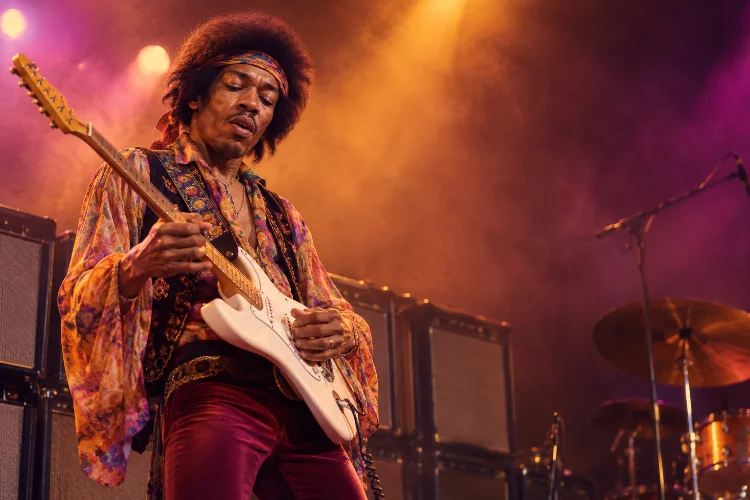
Imagine walking into a concert in the late 1960s and hearing a guitar produce sounds you’ve never experienced before. Screaming feedback, explosive distortion, unusual melodies, and notes that seem to bend beyond the limits of the instrument.
Then you look at the stage and see one musician making it all happen.
That musician is Jimi Hendrix.
Before Hendrix became a global sensation, electric guitar playing already had incredible innovators.
Blues legends, jazz musicians, and early rock guitarists had developed techniques that shaped popular music. However, Hendrix took those foundations and pushed them into completely new territory.
Understanding how Jimi Hendrix revolutionized electric guitar sound and technique means exploring more than his incredible guitar solos.
His approach to tone, effects pedals, improvisation, recording technology, and musical expression changed how musicians understood the instrument.
What’s especially fascinating is that Hendrix achieved much of this transformation during a remarkably short recording career.
So, what exactly made his playing so revolutionary?
Let’s explore the techniques, equipment, recordings, and creative ideas that helped turn Jimi Hendrix into one of the most influential guitarists in music history.
1. The Musical World Before Jimi Hendrix
To understand Hendrix’s impact, it helps to look at what electric guitar playing was like before he became famous.
During the 1950s and early 1960s, guitarists such as Chuck Berry, B.B. King, Muddy Waters, and Buddy Guy had already established powerful approaches to electric guitar performance.
Their music introduced expressive string bending, blues phrasing, energetic rhythms, and increasingly aggressive guitar tones.
These musicians laid essential foundations for rock guitar.
From Traditional Blues to Psychedelic Rock
Hendrix grew up absorbing blues, rock and roll, rhythm and blues, and soul music. Rather than simply copying his influences, he combined different musical traditions into something remarkably personal.
His early professional experience included performing with artists such as the Isley Brothers and Little Richard.
Working as a supporting guitarist helped Hendrix develop strong rhythmic instincts and an understanding of how guitar parts interact with vocals, drums, and bass.
Everything changed when he moved to London in 1966.
With bassist Noel Redding and drummer Mitch Mitchell, Hendrix formed the Jimi Hendrix Experience. Their debut album, Are You Experienced, arrived in 1967 and introduced listeners to a groundbreaking combination of blues, psychedelic rock, and experimental guitar sounds.
Songs such as “Purple Haze,” “Foxy Lady,” and “Fire” demonstrated that electric guitar could become much more than a conventional rhythm or solo instrument.
It could create an entire musical atmosphere.
2. How Hendrix Transformed Electric Guitar Tone
One of Hendrix’s greatest achievements was redefining what a guitar should sound like.
Many guitarists before him preferred relatively clean amplification, although overdriven tones were already part of blues and rock music.
Hendrix embraced distortion, extreme volume, and unusual electronic textures as essential elements of his musical identity.
Turning Distortion Into Musical Expression
Distortion occurs when an audio signal is driven beyond the clean operating range of an amplifier or another electronic device.
Instead of reproducing the original signal perfectly, the equipment adds harmonics and compression that change the instrument’s tone.
The result can sound thick, aggressive, and incredibly powerful.
Hendrix used this effect creatively rather than treating it as an accidental consequence of excessive volume.
Listen to “Purple Haze,” and you’ll hear distorted guitar tones that feel almost explosive.
The notes remain recognizable, but their texture adds emotional intensity that a clean guitar might struggle to reproduce in the same way.
Making Feedback Part of the Music
Feedback was another major component of Hendrix’s signature sound.
Normally, guitarists tried to avoid the unpleasant squealing that occurred when amplified sound caused guitar strings to vibrate uncontrollably.
Hendrix approached the phenomenon differently.
By positioning his guitar near loud amplifiers, he could encourage sustained notes, harmonic overtones, and unusual resonances.
More importantly, he learned to control these sounds through positioning, touch, volume, and timing.
Feedback became a form of musical expression rather than unwanted noise.
This willingness to experiment helped establish a broader artistic principle: sounds that appear technically imperfect can become powerful creative tools.
His constant sonic experimantation encouraged later generations to embrace unconventional tones.
3. Revolutionary Guitar Techniques That Changed Rock Music
Hendrix’s innovative equipment was only part of the story.
His actual playing technique was equally important, combining physical control with remarkable musical imagination.
Rather than separating rhythm guitar from lead guitar, Hendrix often blended them into a continuous performance.
The Famous Thumb-Over-Neck Technique
Traditional guitar instruction commonly teaches players to position their fretting-hand thumb behind the neck.
Hendrix frequently wrapped his thumb around the neck to press down bass notes on the lower strings.
This gave his remaining fingers more freedom to play additional melodies and decorative notes.
For example, while holding a chord, he could add hammer-ons, pull-offs, and short melodic phrases without completely changing hand position.
You can hear this approach in songs such as “Little Wing” and “The Wind Cries Mary.”
The result is a rich guitar arrangement that sounds like several musical parts happening simultaneously.
Combining Rhythm and Lead Guitar
Most beginner guitarists learn rhythm patterns and solos as separate skills.
Hendrix often treated them as interconnected elements.
He could begin with a chord progression, introduce a short blues lick, emphasize a bass note, and return to the main rhythm almost instantly.
This technique created flowing musical conversations within individual guitar parts.
His use of double-stops, where two notes are played together, added additional harmonic depth.
He also incorporated rhythmic influences from soul and R&B, giving his playing a distinctive sense of groove.
Expressive String Bending and Vibrato
Hendrix was not the first guitarist to use string bending or vibrato.
However, his emotional control over these techniques became a defining characteristic of his style.
A single sustained note could gradually bend upward, shake with vibrato, and dissolve into feedback.
Sometimes these moments communicated more emotion than a complicated sequence of fast notes.
He also used the Stratocaster’s vibrato arm to produce dramatic pitch movements.
By combining expressive phrasing with electronic effects, Hendrix created sounds that could resemble voices, sirens, and other unexpected sonic textures.
His playing proved that musical expression matters just as much as technical speed.
4. The Equipment Behind Jimi Hendrix’s Signature Guitar Sound
Hendrix’s sound resulted from the interaction between his playing style and carefully chosen equipment.
Although his setup evolved throughout his career, several instruments and effects became closely associated with him.
Fender Stratocaster and Marshall Amplifiers
The Fender Stratocaster became Hendrix’s most recognizable instrument.
As a left-handed guitarist, he frequently played right-handed Stratocasters turned upside down and restrung for left-handed playing.
This configuration changed certain physical relationships within the instrument, including pickup orientation and string arrangement.
These differences contributed to aspects of his recognizable tone, although his playing technique remained the most important ingredient.
Hendrix also became strongly associated with powerful Marshall amplifiers.
Their high-volume performance allowed him to create saturated overdrive, impressive sustain, and controlled feedback.
The combination of a Stratocaster and a loud Marshall amplifier became one of rock music’s most influential guitar setups.
Effects Pedals That Expanded His Sonic Palette
Hendrix helped popularize several effects that eventually became standard equipment for rock guitarists.
The Fuzz Face pedal delivered aggressive distortion with thick harmonic content. Its sound became a major part of his recorded and live performances.
The wah-wah pedal produced a moving filter effect that emphasized different frequencies as the guitarist operated a foot pedal.
Listen to “Voodoo Child (Slight Return)” to hear how Hendrix transformed the wah-wah into a highly expressive musical device.
He also experimented with the Octavia, which generated octave-related harmonic effects, and the Uni-Vibe, which created swirling modulation.
What made Hendrix special wasn’t simply owning these devices.
He treated them as extensions of his musical imagination, combining them with picking dynamics and phrasing to develop distinctive sounds.
For modern guitarists, this offers an important lesson: expensive equipment alone cannot replace creativity.
5. How Hendrix Revolutionized Recording Studio Techniques
Hendrix was not satisfied with revolutionizing live guitar performances.
He also recognized that recording studios offered creative possibilities unavailable on an ordinary concert stage.
During the late 1960s, multitrack recording and emerging audio technologies gave musicians increasing control over their recorded sound.
Hendrix embraced these developments enthusiastically.
Treating the Recording Studio as an Instrument
Instead of recording guitar performances as straightforward live reproductions, Hendrix explored how sounds could be layered, transformed, and positioned within a recording.
He worked closely with recording engineers, including Eddie Kramer, to experiment with stereo movement, tape manipulation, and audio effects.
Guitar parts could move between speakers, while different layers created spacious and sometimes surreal soundscapes.
This approach was particularly noticeable on Axis: Bold as Love, released in 1967, and Electric Ladyland, released in 1968.
The latter album demonstrated Hendrix’s growing ambition as a songwriter, musician, and producer.
The Creative Innovation of Electric Ladyland
Electric Ladyland remains an essential example of psychedelic rock production.
Its recordings combine blues improvisation, layered guitars, atmospheric effects, and unusual arrangements.
The extended composition “1983… (A Merman I Should Turn to Be)” demonstrates Hendrix’s interest in constructing imaginative musical environments.
Rather than focusing exclusively on conventional guitar solos, the recording develops an expansive underwater-inspired atmosphere.
His interpretation of Bob Dylan’s “All Along the Watchtower” offers another remarkable example.
Layered guitar parts, dramatic transitions, and a memorable arrangement transformed the song into a distinctive rock recording.
Hendrix didn’t invent multitrack recording or studio effects, but his use of them helped expand the creative possibilities of guitar-based music.
Today, similar principles appear throughout rock, electronic music, ambient production, and experimental recording.
6. Iconic Live Performances That Redefined Guitar Performance
Hendrix’s studio recordings were revolutionary, but his live performances helped establish his legendary reputation.
He combined advanced musical ability with extraordinary stage presence.
His concerts frequently involved spontaneous improvisation, theatrical movement, and intense interaction with his equipment.
Monterey Pop Festival in 1967
Hendrix’s appearance at the Monterey International Pop Festival in June 1967 was a major breakthrough in his American career.
Although he had already become successful in Britain, this performance introduced him to a much wider American rock audience.
His dramatic version of “Wild Thing” ended with one of rock music’s most famous stage moments.
Hendrix set his guitar on fire.
The incident became legendary, but the musical performance surrounding it was equally significant.
His combination of showmanship, improvisation, and sonic power challenged expectations about what a rock guitarist could accomplish onstage.
Woodstock and The Star-Spangled Banner
Perhaps Hendrix’s most culturally significant performance occurred at Woodstock on August 18, 1969.
His interpretation of the American national anthem transformed a familiar melody into an intense electric guitar statement.
Using feedback, distortion, pitch bends, and his guitar’s vibrato arm, Hendrix created sounds that listeners associated with explosions, aircraft, and the chaos of warfare.
The performance emerged during the Vietnam War, giving its unusual sonic language additional historical significance.
Although interpretations differ, many listeners have understood it as a powerful reflection on American identity, conflict, and the turbulent atmosphere of the 1960s.
It remains an unforgetable demonstration of how instrumental music can communicate complex ideas without lyrics.
Machine Gun and the Power of Improvisation
Another essential performance came from Hendrix’s Band of Gypsys period.
Performing alongside bassist Billy Cox and drummer Buddy Miles, Hendrix explored a heavier combination of blues, funk, and improvisational rock.
Their performances at New York’s Fillmore East on December 31, 1969, and January 1, 1970, produced the live album Band of Gypsys.
“Machine Gun” became one of its defining recordings.
The composition features expressive guitar passages, sustained feedback, and rhythmic bursts that evoke the violence of armed conflict.
Its power comes from more than technical complexity.
Hendrix used an improvizational approach to communicate tension, anger, sadness, and vulnerability through instrumental sound.
That emotional dimension helped distinguish his playing from conventional guitar virtuosity.
7. Jimi Hendrix’s Lasting Influence on Modern Guitar Players
More than five decades after Hendrix’s death in September 1970, his influence remains visible across numerous musical genres.
His innovations contributed to the development of hard rock, heavy metal, funk rock, psychedelic music, and experimental guitar performance.
However, his greatest legacy may be the creative freedom he encouraged.
How Hendrix Inspired Future Guitar Legends
Stevie Ray Vaughan became one of the most prominent guitarists influenced by Hendrix’s blues-based style.
Vaughan embraced expressive string bending, energetic performances, and powerful electric guitar tones while developing his own musical identity.
Artists such as Prince also demonstrated how guitar virtuosity could coexist with funk rhythms, elaborate production, and theatrical performances.
Countless later guitarists adopted Hendrix-inspired techniques, including thumb-based chord voicings, dynamic wah-wah playing, and expressive feedback.
His influence extends beyond musicians who directly imitate his sound.
Hendrix helped normalize the idea that guitarists could explore unfamiliar musical textures without abandoning melody or emotional expression.
Practical Lessons Guitarists Can Learn From Hendrix
You don’t need a vintage Stratocaster or an enormous amplifier stack to learn from Hendrix.
His approach offers valuable lessons for players at almost every skill level.
Start by exploring the relationship between rhythm and melody.
Choose a simple chord progression and experiment with adding short melodic phrases between chord changes.
Next, practice controlling dynamics.
Play the same phrase softly, then increase your picking intensity and listen to how the emotional character changes.
Experiment with bends, vibrato, and sustained notes rather than concentrating exclusively on speed.
If you use effects pedals, begin with one effect and explore its full range before adding additional equipment.
A wah-wah pedal, for example, can sound dramatically different depending on how you coordinate foot movement with your picking.
Finally, spend time improvising over blues progressions and simple backing tracks.
Try developing a musical idea rather than filling every available moment with notes.
Hendrix’s playing demonstrates that space, timing, and imagination can be just as important as complicated techniques.
Why His Musical Philosophy Still Matters
One of the most remarkable aspects of Hendrix’s career is how naturally he combined established musical traditions with new technology.
His playing remained deeply connected to the blues, even when his sounds became futuristic.
This balance between musical heritage and experimentation is something modern artists can still learn from.
Technology changes constantly, but the basic challenge remains the same: how can a musician create something that feels personal and emotionally meaningful?
Hendrix showed that the answer involves curiosity, individuality, and a willingness to challenge accepted rules.
His legacy isn’t simply about recreating his equipment or memorizing his solos.
It’s about discovering new possibilities within an instrument you thought you already understood.
Jimi Hendrix transformed electric guitar music by combining innovative sound design, expressive playing techniques, adventurous recording methods, and unforgettable live performances.
His mastery of distortion, feedback, wah-wah effects, and melodic improvisation helped redefine the guitar’s role in popular music.
Perhaps most importantly, Hendrix demonstrated that musical creativity should never be limited by conventional expectations.
His influence continues to inspire guitarists who want to develop distinctive tones and communicate emotion through their instruments.
Whether you’re a beginner exploring blues guitar or an experienced musician experimenting with new effects, there’s always something valuable to learn from his approach.
Want to understand his genius firsthand? Listen closely to “Little Wing,” “Voodoo Child (Slight Return),” and “Machine Gun.” Then pick up your guitar, explore new sounds, and discover where your own creativity can take you.